Key takeaways
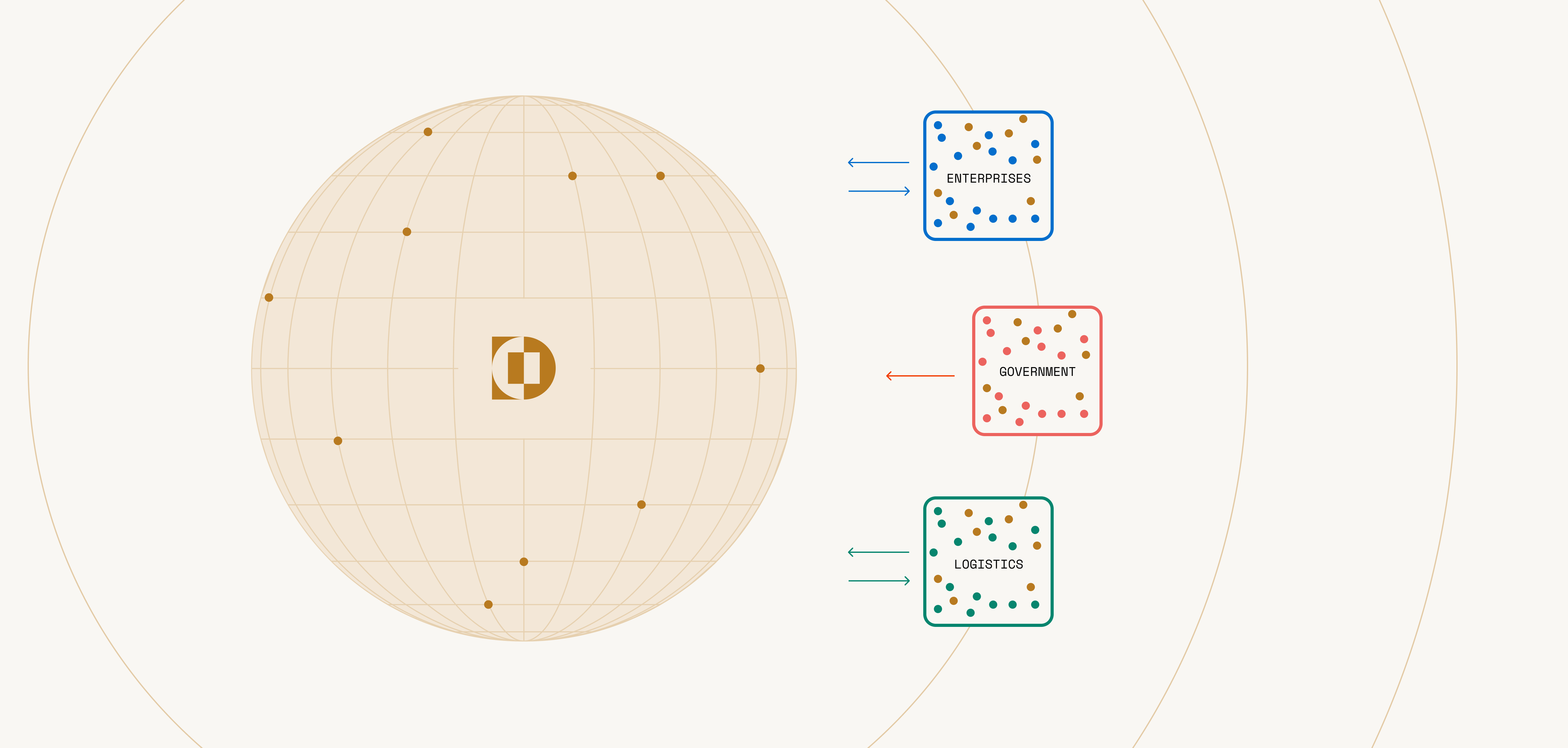
Traditional supply chain risk management (SCRM) tools fail in today's trade environment because they flag supplier risks without a connection to actual products, making it possible to verify issues, or providing a way to remediate them. Altana replaces that fragmentation with a product-level network that connects suppliers, logistics providers, and regulators to one shared source of truth.
- Traditional supply chain risk management tools surface risks at the supplier and entity level, not the product level, producing high volumes of low-context alerts disconnected from products, revenue, or compliance obligations.
- Trade regulations like the Uyghur Forced Labor Prevention Act (UFLPA) and the National Defense Authorization Act (NDAA) now require true N-tier visibility — upstream traceability to the components, materials, origins, and inputs far beyond Tier 1 suppliers.
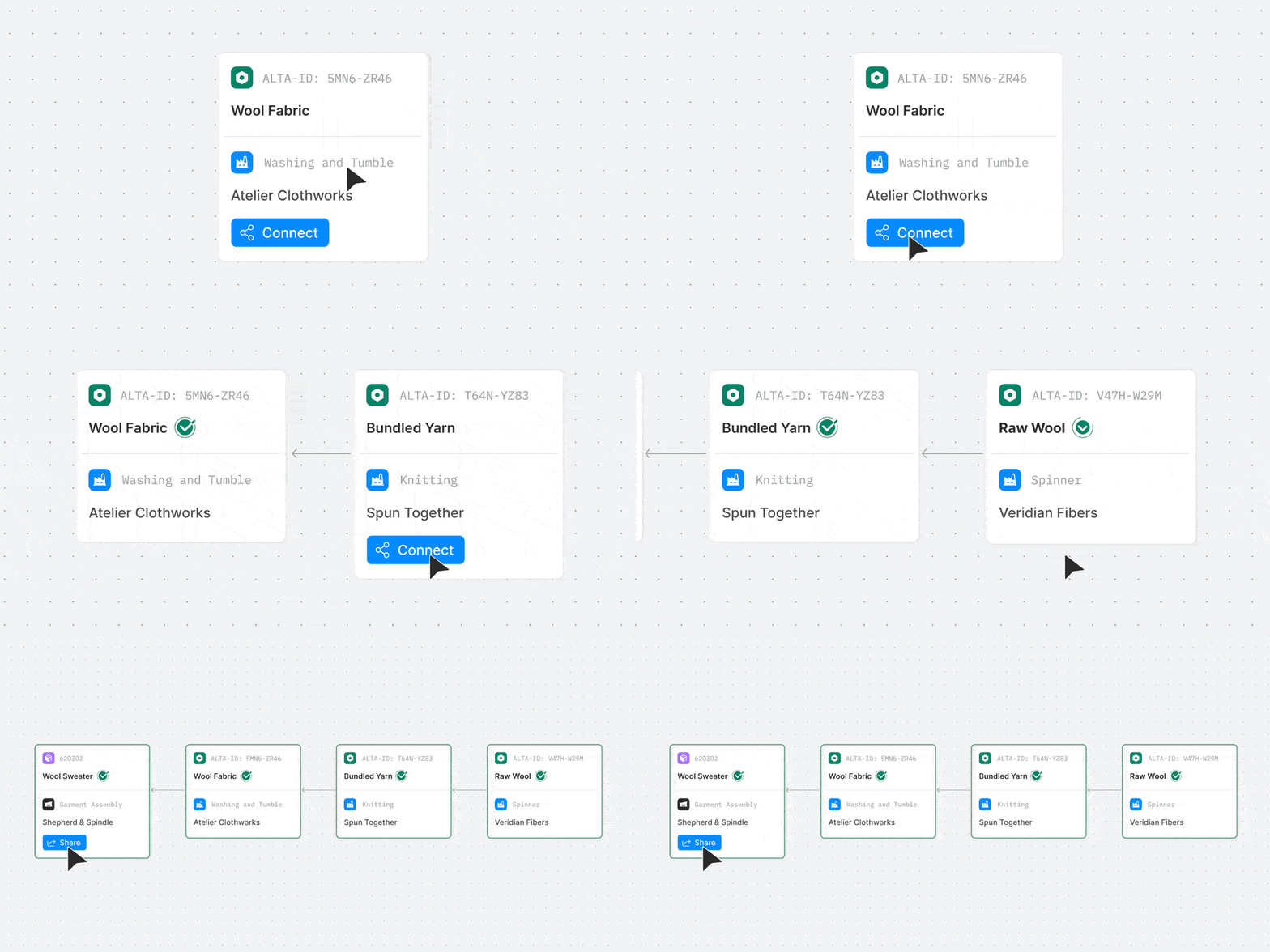
- Altana's Product Catalog serves as a single source of product truth that combines a company's own systems, AI suggestions from Altana's Knowledge Graph, and supplier-verified data into full product value chains.
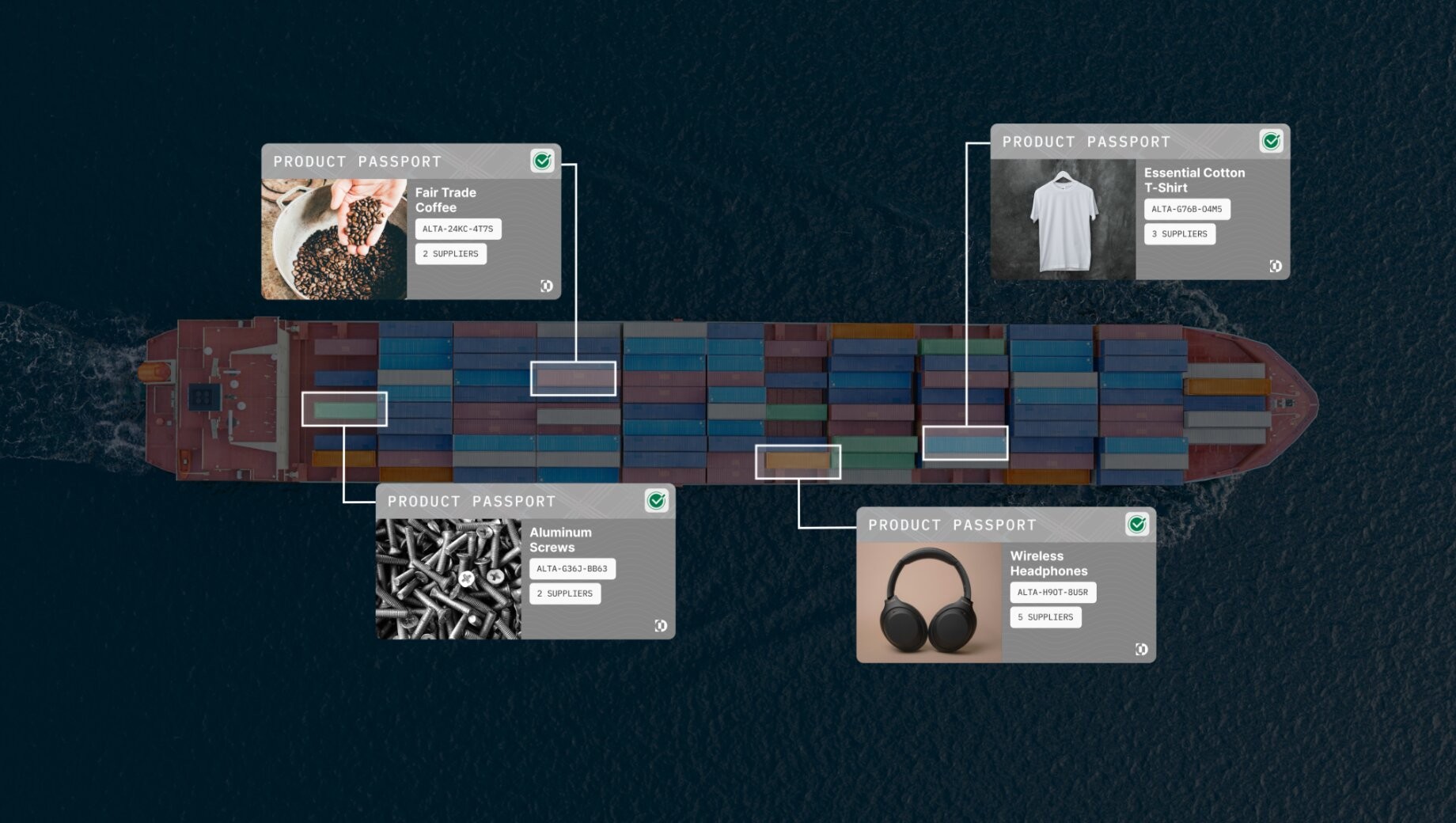
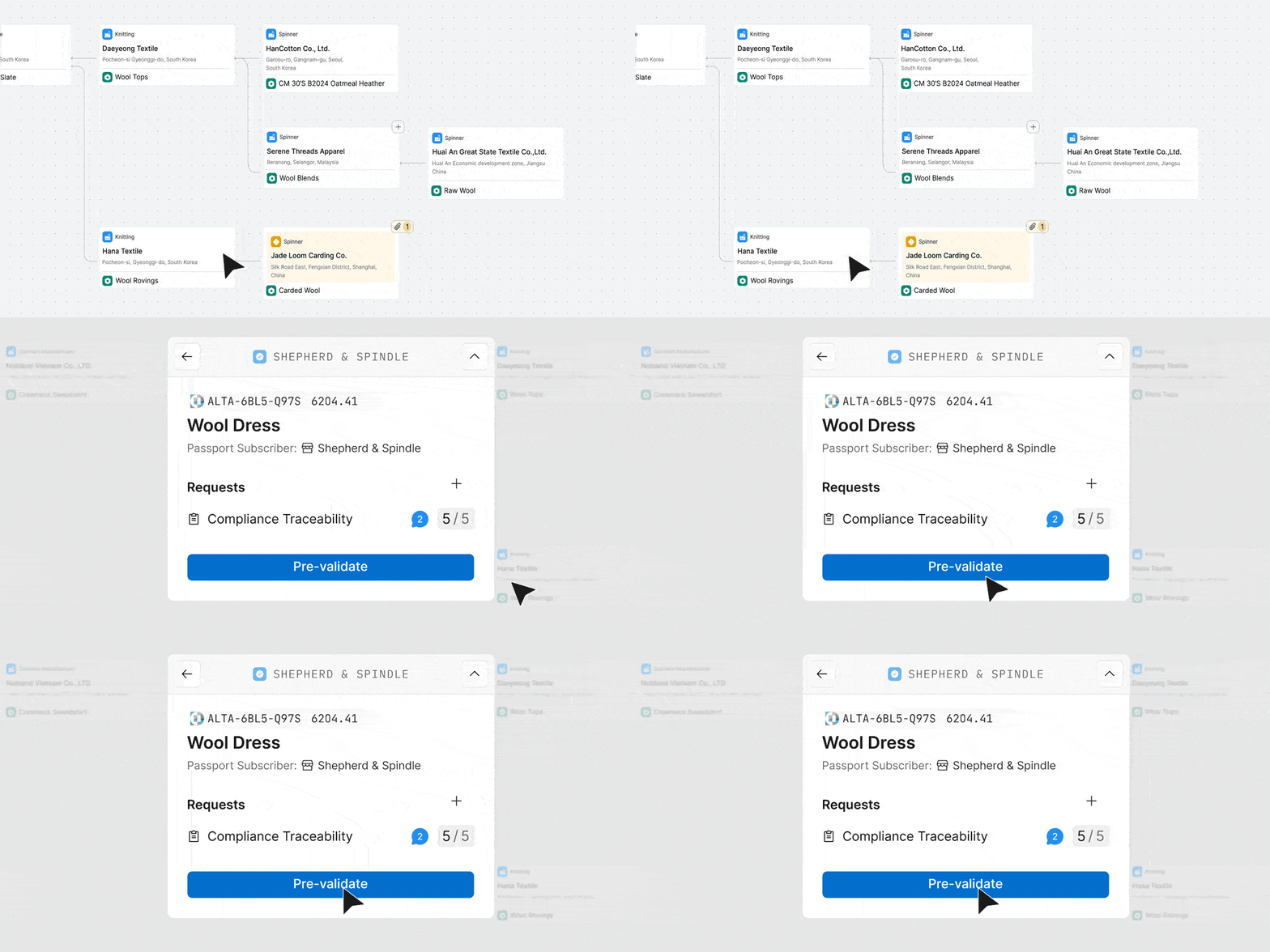
- With Altana, importers get agentic AI workflows to perform faster, more accurate trade work. Then, importers share Product Passports with regulators like CBP before goods ship to pre-validate border clearance.
- Trade regulations now require true N-tier visibility. The Uyghur Forced Labor Prevention Act (UFLPA), complex, component-based tariffs, the National Defense Authorization Act (NDAA) — all require upstream traceability, far beyond Tier 1 suppliers, to the components, materials, origins, and inputs that make up products.
- Geopolitical competition and fragmentation has made trade a fault line and a weapon. U.S.-China decoupling, Russian sanctions, and rising protectionism are creating upstream risks and product-line disruption that most importers can’t see.
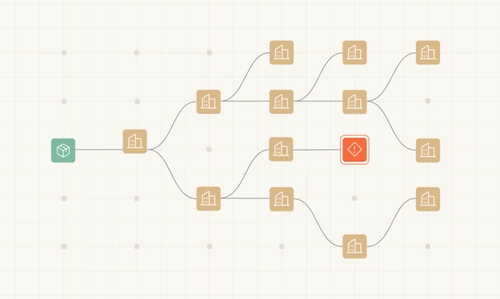
Reveal Your Products' DNA With Product Value Chains
Learn MoreSCRM’s outdated and ineffective approach
- SCRM offers supply chain visibility, but doesn’t put in the context of your actual products. SCRM tools surface risks at the supplier and entity level, not the product level. Some SCRM systems claim a rudimentary representation of a “product,” but these are filters applied to public risk data, not a system of record tied to the transformation of goods between companies along product value chains. The result is a high volume of low-context alerts that are disconnected from products, revenue, or compliance obligations. You might learn how your software license provider connects to a tax advisor of a grocery supplier that services a tier two product supplier in your network, but this distraction obscures and overwhelms more important alerts about a forced labor flagged entity three tiers upstream that could cause a border detention tomorrow. So, your team either drowns in meaningless flags or stops trusting the system altogether.
SCRM threatens to drown your business in noise and distract from more impactful work.
- SCRM tools identify risks, but don’t give you the ability to take action to address them. SCRM tools stop at identification — a flagged supplier, a risk score, an alert. Beyond these flashing red lights, there is actual work to be done and value to be realized, but SCRM doesn't allow you to take action within the tool. Plus, many costs for businesses are driven by changes to trade compliance, which a supplier risk score doesn’t address at all. In this way, SCRM tools widen the gap between seeing a risk and actually doing something about them — which is where most companies bleed margin and time. SCRM is the business equivalent of going to the doctor, being told that “you might be sick,” being given no medicine, and then having the exact same experience again and again. Nobody would blame you if at some point, you wanted a new doctor who had ideas about how to help you get better.
- SCRM gives you AI-derived visibility, but doesn’t allow you to verify issues. AI visibility has value in identifying potential risks and helping you prioritize the risks and exposures lurking in your supply chain. But alone, AI visibility is insufficient. The insights gleaned from connections generated by AI on public data are noisy and meaningless if they can’t be verified and burnished with information from a range of trusted sources, including supplier data, PLMs, ERPs, Global Trade systems, and more. Real traceability on actual product value chains is essential — especially in a world where what’s in your products anchors both attestations to regulators and decisions that involve millions of dollars of revenue.
The overarching problem: Global trade means making decisions about products, and SCRM tools are disconnected from them

Component-Based Tariffs Tax the Goods Within Your Goods
Learn MoreMoving from broken SCRM to trusted trade through an AI-powered source of product truth and collaboration
- A product-level foundation: You need a system of record for your products — what they’re made of, where the parts come from, and who supplies them.
- The ability to connect with supply chain partners: Once you have a product-level foundation, you have to connect it to all the partners involved in getting a product from raw materials to the final customer. This includes suppliers, who collaborate on and verify actual product value chains; logistics providers, who you task with moving your goods efficiently; and regulators, to whom you need to prove compliance.
- Agentic AI workflows that turbocharge trade work — and get smarter over time: Altana AI performs faster, more accurate trade work, like classifying a product or calculating duties, by operating on top of a system of record for your products. These agentic recommendations first draw from your product information and then, after you’ve confirmed accuracy, the AI pipes its learnings into your product catalog, improving your data foundation over time.
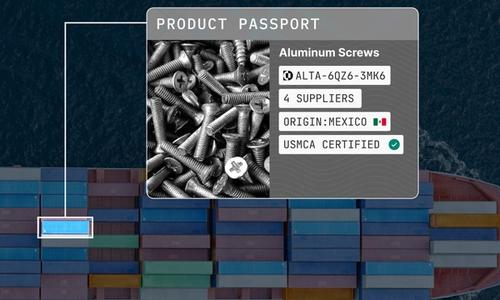
Perform Complex COO Determination and Claim FTA Qualification in Minutes
See the Full Workflow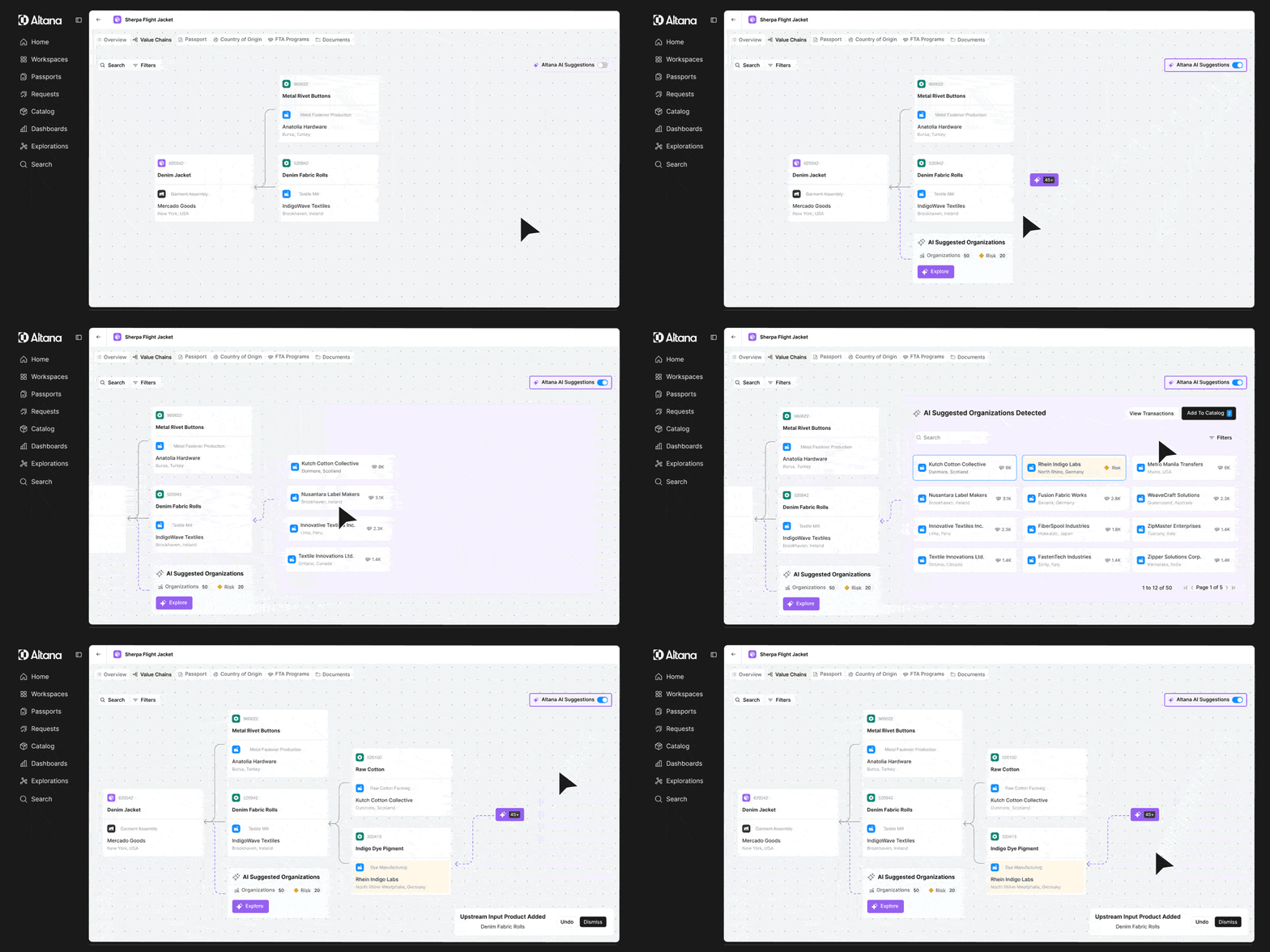
What changes when you move from traditional SCRM to Altana’s network for trusted trade
- Replacing a patchwork of tools with a single product foundation: Instead of using the stack of disconnected tools associated with traditional SCRM — risk monitoring, investigations, supplier surveys, trade management, spreadsheets, and more — you get a shared source of truth and a single place to complete your most valuable trade workflows.
- Turning visibility into trade action: The same product foundation that maps your value chains is also what powers HS classification, country of origin, duty calculation, and FTA qualification. SCRM tools were never designed to touch these workflows, and with Altana, you remove the painful jamming together of a risk tool, a GTM tool, and a spreadsheet to answer even simple trade and tariff questions.
- Collaborating with suppliers in the context of real products: You share value chains, request documentation, and verify connections that are anchored on actual products, not disconnected emails, surveys, or spreadsheets.
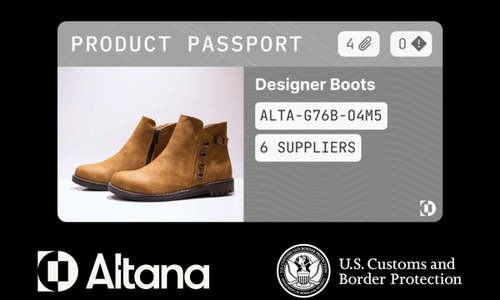
Join CBP's official Product Passport program
Request Your Demo- Pre-validating shipments with regulators, not scrambling after detentions: Share Product Passports with regulators like CBP before goods hit the border. Enforcement moves from a surprise to a formality.
- Accurately modeling disruption before it hits: Simulate tariff scenarios, geopolitical disruptions, and supplier failures fast and accurately. You can provide leadership information broken down by product, revenue, and supplier so it’s possible to act before the cost depresses your margins.
- Bringing trade compliance and sourcing into the same picture and shared workstreams: When duty exposure, compliance risk, and supplier alternatives live in one place, trade compliance stops being a back-office cost center and starts informing sourcing decisions and supplier selections.
- Designing and sourcing with trade intelligence built in from the start: Know duty implications, compliance risks, and supply chain vulnerabilities before you commit to a sourcing strategy — not after it’s already in progress.
Replace SCRM planning and solutions with a trusted network for trusted trade
FAQs
Supply chain risk management (SCRM) plans fail because the trade environment has changed faster than traditional SCRM tools could evolve. These tools flag supplier-level risks but don't connect them to actual products, don't let teams take action within the tool, and don't address rising costs driven by trade compliance changes. The result is a high volume of low-context alerts that teams either drown in or stop trusting.
SCRM tools provide supplier-level risk visibility but stop at identification, offering no way to take action or verify issues. Altana's network is built around a product-level foundation — a system of record for what products are made of, where parts come from, and who supplies them — that connects suppliers, logistics providers, and regulators to one shared, verified source of truth and powers trade workflows like classification and duty calculation.
AI-derived visibility helps identify and prioritize potential risks, but on its own it produces noisy, unverified connections drawn from public data. Those insights become meaningful only when verified and enriched with trusted sources like supplier data, PLMs, ERPs, and Global Trade systems. Real traceability on actual product value chains is essential because what's in your products anchors both regulatory attestations and decisions involving millions of dollars in revenue.
Altana uses a product-level foundation to power HS classification, country of origin, duty calculation, and FTA qualification — workflows that traditional SCRM tools were never designed to touch. Companies can also simulate tariff scenarios, geopolitical disruptions, and supplier failures broken down by product, revenue, and supplier, so leadership can act before costs compress margins.
A Product Passport is a verified record of a product's value chain that suppliers contribute to and confirm within Altana's network. Companies can share Product Passports with regulators like CBP before goods reach the border, allowing regulators to verify compliance in advance. This shifts enforcement from a surprise detention after shipments arrive to a formality completed beforehand.