Fragility, mistrust, and geopolitics have brought the free trade era to an end. Now, in a new era of geopolitical competition and trade wars, trade and supply chain networks are prone to constant disruption. Global trade is broken. Businesses, logistics providers, and governments need one network they can trust to rebuild how goods are made, moved, and cleared.
About us
Our mission: Fix globalization














The AI network for trusted trade
Altana is the network for trusted trade. We connect importers, suppliers, logistics providers, and customs agencies around an intelligent network for managing global product value chains and orchestrating secure, resilient, and trusted global trade. Businesses use Altana to automate and navigate the complexity of global trade and tariffs, and to build supply chain resilience. Logistics providers use it to automate the full customs brokerage workflow. Governments use it to strengthen economic security, manage their borders, and enable the flow of trusted trade.
An agentic network for managing products and their value chains
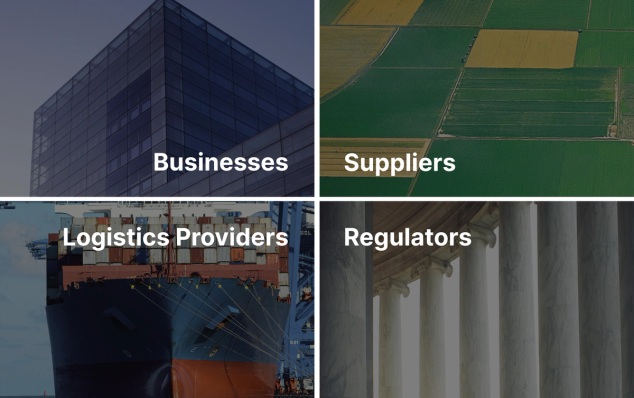
Importers manage their products and underlying suppliers within an intelligent product catalog, Altana's system of record. Product Passports extend that record to suppliers, logistics providers, customers, customs authorities, and other regulators. All parties connect on the world’s most comprehensive map of global trade — the Altana Supply Chain Graph.
How it works:
- Businesses contribute their known product and supplier information.
- Manufacturers on the network link their product data upstream in the chain through Altana Product Passports.
- AI agents do work across the connected network: from trade enforcement and border management, to customs brokerage, to trade compliance and supply chain management.
8 of the largest logistics providers use Altana to manage cross-border trade
140M buyer-supplier connections managed on Altana
5 governments — the US, UK, Australia, EU, and Singapore — use Altana as their supply chain system of record
Awards & Recognition
Industry awards and recognition
Fast Company Most Innovative Companies 2026

Inc. Magazine 16 Companies to Watch in 2026

Built in Best Place to Work 2024

Fast Co World Changing Ideas 2024

Fast Co Most Innovative Companies 2023

Fast Co World Changing Ideas 2023

ProcureTech 100 2023

Supply & Demand Chain Exec Top Tech Startup 2023


Altana in the press


"Changing tariffs and trade policies are setting off a race to build technology that can help companies navigate the complexity. Altana is acquiring Cervo AI, an artificial-intelligence platform that automates the process of writing customs entries."


"Altana's agentic trade workflows keep importers' trade and product information up-to-date, so that a business can pre-validate their goods for border crossing, and customs agencies can pre-verify shipments. It's like how a trusted traveler goes through special lanes at the airport."


"U.S. customs authorities are using artificial intelligence to catch tariff dodgers and spot illicit goods before cargo reaches the country, and has worked with Altana since 2023."


Happening at Altana
Our mission in action


Frequently asked questions
Altana is the network for trusted trade. Altana Technologies, Inc. connects importers, logistics providers, and governments around one shared record of every product and its value chain, so goods move faster, compliance is proven, and enforcement gets smarter. Founded in 2018 and headquartered in New York.
Altana Technologies, Inc. was founded in 2018 by Evan Smith, Peter Swartz, and Raphael Tehranian, and is headquartered in New York. It has raised more than $300M, including a $200M Series C in 2024 at a $1B valuation, and acquired Cervo AI in July 2026.
No. Altana (altana.ai), Altana Technologies, Inc., is an AI company for global trade, based in New York. It is unrelated to ALTANA AG, the German specialty chemicals company.
We apply agentic AI workflows to product value chains — the record of where every product comes from, from raw materials to finished goods. That lets enterprises cut duty costs, clear borders faster, and build more resilient supply chains, and it gives government agencies the solutions to build defense readiness, economic security, and modernize customs processes.
Altana applies agentic workflows to product value chains — the source of truth for where products come from. Product value chains are centralized in an intelligent product catalog, Altana's system of record for product master data. Product information is collected using three sources of information:
What you know. Altana takes in existing product data and internal supplier records to jump-start value chain creation.
What AI suggests. AI connects your data to Altana’s supply chain graph, which covers about half of global trade and 600M+ companies, to reveal hidden upstream connections and risks.
What suppliers tell you. Expand your knowledge of product value chains by sending traceability requests to suppliers to confirm material composition, collect documents, and verify origin.
Product value chain information is shared across importers, suppliers, logistics providers, and LSPs using Product Passports, the digital key for trusted trade. They are a verified, shareable representation of a product's origin story — how it's sourced, manufactured, and moved across borders.
- Buyers improve the visibility and traceability of products upstream.
- Suppliers save time responding to buyer requests downstream.
- Logistics providers consult with their importers to move goods efficiently.
- Regulators focus enforcement on the shipments that need it, using records importers have already verified.
Learn more at https://altana.ai/platform.
A Product Passport is a verified, shareable record of a product's origin story: how it's sourced, made, and moved. The importer assembles the evidence before goods ship and shares one record with suppliers, brokers, and customs. Altana was selected by CBP as the only product-level proof of compliance. Learn more about Product Passports here.
Enterprises across automotive, electronics, apparel, manufacturing, and life sciences use Altana to manage trade, tariffs, and build supply chain resilience. Governments use Altana to build defense readiness, economic security, and modern customs. Customs brokers use Altana for Customs Brokerage to turn document packets into submission-ready entries in under five minutes. And logistics providers use Altana to help their customers clear borders faster.
Altana for Customs Brokerage is the first end-to-end agentic customs workflow. AI agents determine and audit trade attributes for every border-clearing good — including classification, product origin, FTA qualification, duty calculation, and Partner Government Agency (PGA) determinations and certificates. Agents then convert documents, emails, and EDI feeds into entry-quality data and prepare customs and PGA filings for multiple jurisdictions, with coverage expanding to all major global import and export destinations through 2027. Finally, agents push entries directly into the broker's existing software for customs filing and accounting (such as NetCHB, CargoWise One, e2open, or Descartes OneView) for review and filing under their own filer code.
Governments worldwide are enacting network-shaped regulations that require product value chain traceability. These network-shaped regulations are the result of geopolitical tensions, economic security interests, and environmental instability. Altana connects businesses, logistics providers, and governments on an AI-powered network — so compliance gets proven, enforcement gets smarter, and goods move faster across borders.
Across industries, Altana customers have - on average - identified $16.2M in duty overpayments over a year of shipments, avoided $54M in repeat detentions, realized $50M in savings through supplier negotiation, prepared customs filings 8x faster, and flagged $11.3B in revenue at risk from export controls.
Contact Altana
Get in touch
Press Inquiries
press@altana.aiGeneral Inquiries
info@altana.aiSecurity Inquiries
security@altana.aiCareer Inquiries
jobs@altana.ai