Key takeaways
An Altana analysis of 299 U.S. commercial space contractors and suppliers reveals extensive adversarial manufacturing hidden deep in space value chains, concentrated in the most critical, hardest-to-replace components. A parallel reliance on Taiwanese semiconductors leaves the space industrial base exposed to geopolitical disruption.
- Since 2022, more than 849,000 U.S. commercial space industrial base imports have included exposure to Chinese-sourced components at Tier 3 or further upstream, where the exposure is hardest to see and most difficult to remediate.
- An additional 15,000 U.S. commercial space imports since 2022 included exposure to Russian-origin components in their product value chains, according to Altana's analysis.
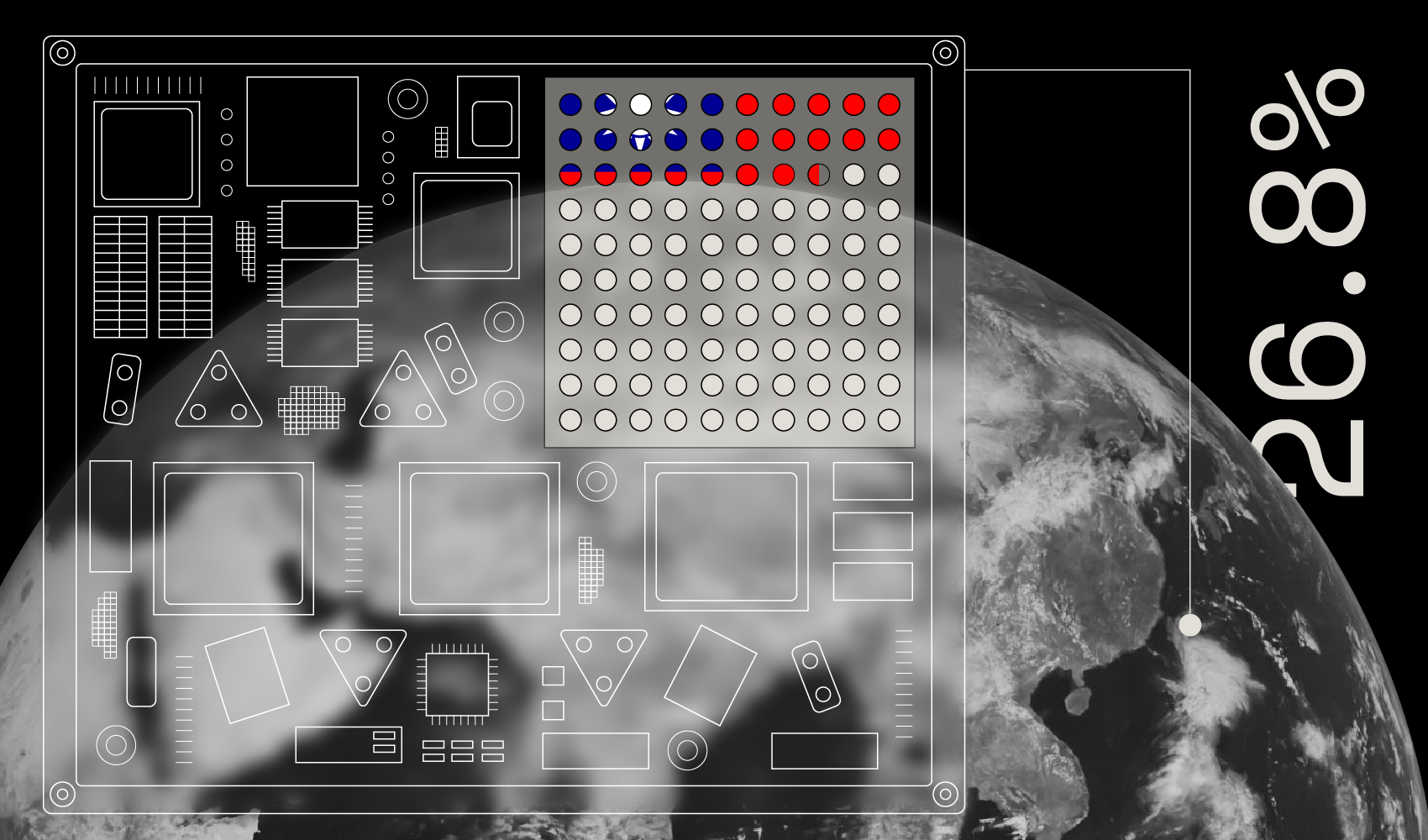
- 26.8% of the commercial space industrial base's semiconductor-related imports since 2022 are from or have upstream exposure to manufacturers in Taiwan within the three most immediate production tiers.
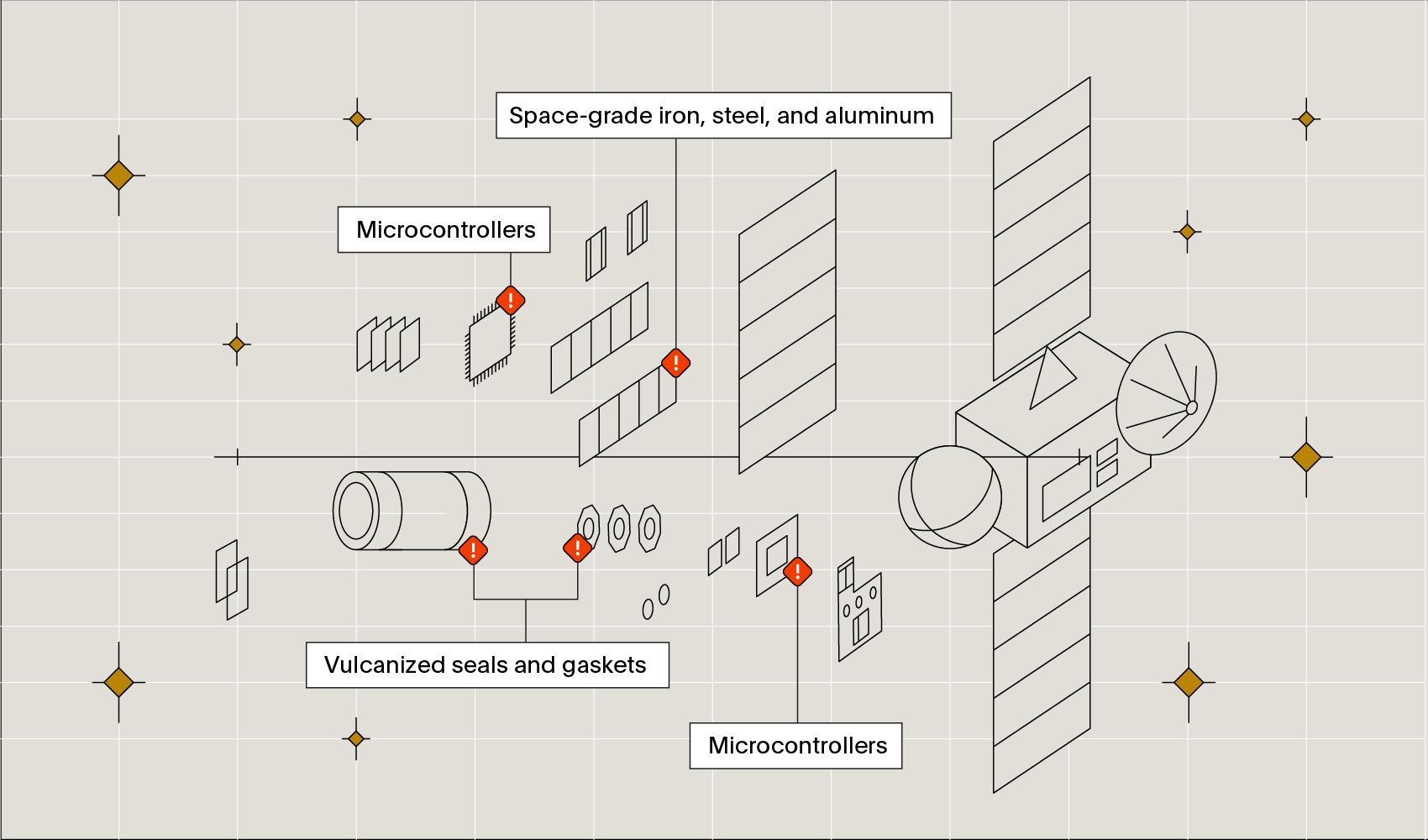
- Adversarial exposure in space supply chains concentrates in the most critical and hardest-to-replace components, including radiation-hardened electronics, vulcanized rubber seals, and space-grade iron, steel, and aluminum parts.
Get the Full Defense Resilience Analysis
Learn MoreAdversarial exposure concentrates in the most critical space components
Over the past decade, China has systematically expanded its space capabilities across military, civil, and commercial sectors… Enabled by a state-directed model and its military-civil fusion strategy, this holistic approach reflects China’s ambition to establish itself not only as a space power, but also as a global leader in science and innovation, using space development to boost its comprehensive national strength and international influence.
Taiwan semiconductor dependence adds a second axis of space industrial base vulnerability
- Which specific programs and product lines have the highest concentration of Taiwan-sourced semiconductor content?
- What is the current lead time to qualify alternative sources for radiation-hardened components, and how does that compare to the timeline of a potential geopolitical disruption?
- Can the space industrial base and DoW partner to identify, in advance, which programs would be most impacted by a simultaneous disruption to adversarial and Taiwanese supply chains — and develop contingency plans for the most critical capabilities?
Scaling readiness and wargaming defense value chains with Altana
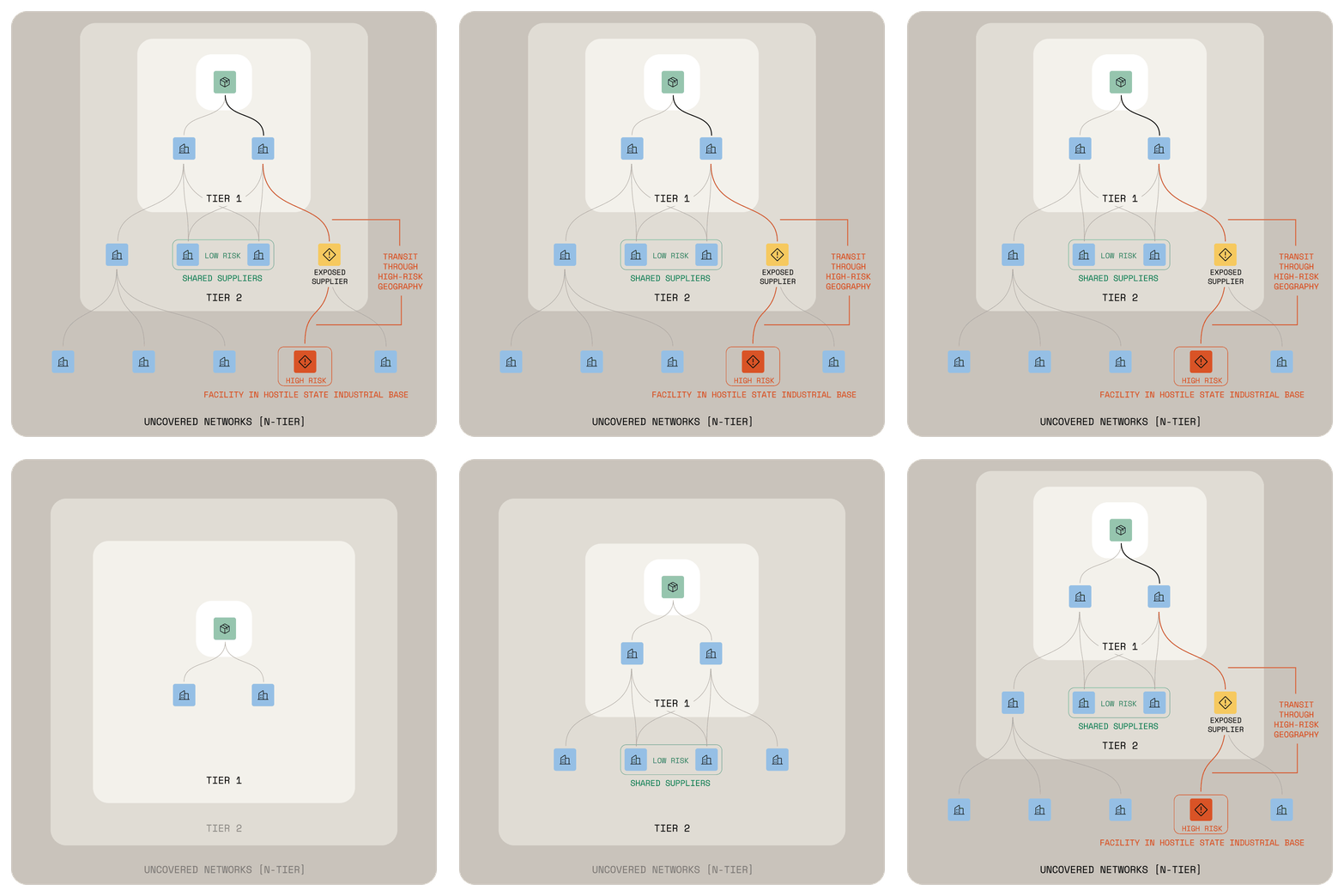
- Illuminating the multi-tier defense supply chain network: Space contractors trace their multi-tier product value chains from finished systems back to raw material origins. Altana’s AI uncovers hidden relationships, dependencies, and risks — including upstream adversarial exposure that traditional supply chain tools miss. As relationships and risks evolve, the network updates dynamically, replacing static, point-in-time assessments with continuous monitoring.
- Facilitating collaboration between government and industry to strengthen supply chains: Defense contractors share verified supply chain data with the defense agency for evaluation. The defense agency assesses resilience and collaborates directly with companies to mitigate vulnerabilities — identifying alternative suppliers, flagging single points of failure, and ensuring that critical programs aren’t dependent on adversarial inputs. This public-private collaboration replaces fragmented, siloed efforts with a shared, collaborative picture.
- Stress-testing and wargaming to test readiness: Defense agencies use Altana to simulate the impact of conflicts and disruptions on defense supply chains — from an invasion of Taiwan to Russian aggression in Eastern Europe to the sudden loss of a critical sub-tier supplier. These exercises assess direct and cascading effects, such as dependencies, chokepoints, and geographic concentrations, allowing defense agencies and their commercial partners to mitigate vulnerabilities before they compromise operations.
About the Analysis
FAQs
Since 2022, more than 849,000 U.S. commercial space industrial base imports have included exposure to components sourced from Chinese suppliers at Tier 3 or further upstream, according to Altana's analysis of 299 contractors and suppliers. This exposure is concentrated deep in product value chains, where it is hardest to see and most difficult to remediate.
The most critical space components require specialized manufacturing and critical minerals over which China holds a global chokepoint, concentrating adversarial exposure in the parts that are most essential and hardest to replace. Altana found this exposure clusters in radiation-hardened electronics, vulcanized rubber seals and gaskets, and space-grade iron, steel, and aluminum parts.
Taiwan dominates advanced semiconductor fabrication, so the most capable, space-qualified chips often trace back to Taiwanese foundries even when the immediate supplier is based in the U.S. or another allied nation. A Chinese invasion of Taiwan could simultaneously disrupt supply for hundreds of space programs, and radiation-hardened space-grade semiconductors cannot be quickly sourced elsewhere because production requires specialized fabrication, extensive qualification testing, and years-long certification cycles.
Adversarial exposure in China or Russia creates compliance and security risks that can be mitigated by identifying and replacing upstream suppliers. Taiwan dependence instead creates a concentration and fragility risk, where a single geopolitical event could disrupt supply for hundreds of space programs with no near-term alternative.
Altana partners with defense agencies to build a common operating platform that illuminates multi-tier supply chains from finished systems back to raw material origins, facilitates collaboration between government and industry, and stress-tests readiness through wargaming. These exercises simulate disruptions such as an invasion of Taiwan or the loss of a critical sub-tier supplier, allowing agencies and partners to mitigate vulnerabilities before they compromise operations.