How Altana and Kharon Are Revolutionizing Forced Labor Risk Management
Key takeaways
Altana and Kharon pair real-time, multi-tier value chain visibility with forced labor intelligence, so companies can find and resolve UFLPA risk before goods ship — using the same data CBP uses to screen shipments at the border.
✓CBP has detained more than $3.6 billion in goods under the UFLPA, so a reactive, document-it-later approach to forced labor compliance no longer holds up.
✓Altana maps forced labor risk from raw materials to finished products across every supply chain tier — not just the direct suppliers a company already knows.
✓CBP analysts use Altana and Kharon to enforce the UFLPA, so companies on the same platforms screen shipments through the exact lens their goods will be judged by.
✓Together the platforms shift compliance from reactive cleanup to proactive risk management, and that same visibility strengthens supplier relationships and resilience.
Today’s enterprises face an unprecedented challenge: ensuring compliance with forced labor laws across increasingly complex, multi-tier global networks.
U.S. Customs and Border Protection has detained more than $3.6 billion worth of goods suspected of having forced labor in their product value chains since the enactment of the Uyghur Forced Labor Prevention Act (UFLPA). Enterprises can no longer afford a reactive approach to forced labor compliance.
Altana has partnered with Kharon to deliver the industry's most comprehensive solution for identifying, managing, and mitigating forced labor risks across value chains.
The Partnership That Changes Everything
Altana's Product Network, combined with Kharon's forced labor intelligence, delivers the unprecedented capability to see, understand, and manage compliance risks from raw materials to finished products. This isn't just another compliance solution – it's a fundamental shift in how companies approach supply chain transparency.
"The complexity of global supply chains has historically made forced labor detection an overwhelming task," explains Altana’s Kristen Daniels. "Our partnership with Kharon empowers enterprises, OEMs, and their suppliers to move from reactive compliance to proactive risk management – addressing these challenges before they become business disruptions."
"This partnership means companies across sectors can now proactively address potential issues using the same intelligence and analytical framework that enforcement agencies rely on."
Ethan Woolley, Strategic Growth Director, Kharon
Real-Time Visibility Meets Expert Intelligence
The Altana-Kharon solution addresses three critical industry needs:
Complete Supply Chain Visibility: Altana situates enterprises’ value chains – from raw materials like lithium and rare earth elements to finished vehicles – within the Product Network, a dynamic, real-time view of global supply networks. This enables companies to detect forced labor risk at every tier, not just among direct suppliers.
AI-Powered Risk Assessment: Using real-time alerts and AI-powered decision support, Altana’s platform focuses attention on areas of exposure specific to each business. Kharon’s proprietary intelligence platform combines vast, continuously updated datasets with advanced analytics and human subject matter expertise, delivering unmatched insight into forced labor, sanctions, and trade restrictions that can identify and mitigate risks before they disrupt production lines or trigger regulatory action.
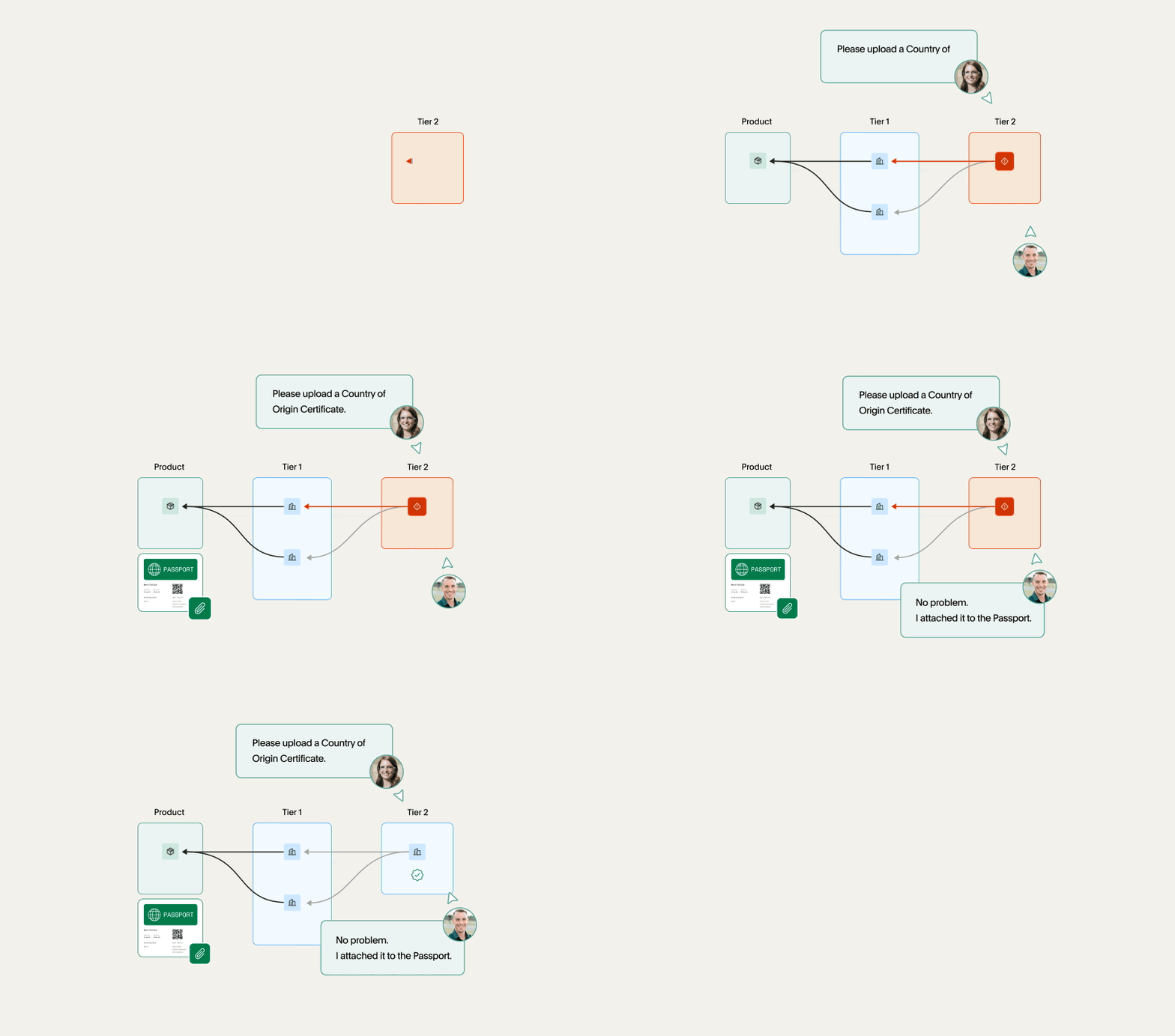
Regulatory Collaboration: The solution provides workflows to collect and verify documentation from distant suppliers, build comprehensive audit trails, and file regulatory reports. Most importantly, it enables seamless collaboration with internal teams, extended supplier networks, and regulators from one shared source of truth.
Build Compliant, Forced Labor-Free Value Chains With Altana
Here's what makes this partnership particularly powerful: CBP analysts themselves use Altana and Kharon to enforce the UFLPA, screening goods entering the U.S. for forced labor risks. When enterprises use the same platforms, they benefit from utilizing the exact lens through which their shipments will be evaluated.
"This partnership is game-changing for companies across sectors," says Ethan Woolley, Strategic Growth Director at Kharon. “They can now proactively address potential issues using the same intelligence and analytical framework that enforcement agencies rely on, dramatically reducing the risk of costly detentions and delays."
Beyond Compliance: Strategic Value Creation
While forced labor compliance is the immediate driver, the Altana-Kharon partnership delivers strategic value beyond regulatory requirements. Companies gain unprecedented visibility into their supply networks, enabling better supplier relationship management, risk diversification, and supply chain optimization.
The platform's collaborative nature also strengthens relationships with customs authorities and other regulatory bodies, positioning compliant companies as trusted partners in global trade enforcement.
As global regulations continue to evolve and enforcement intensifies, the industry needs solutions that are not just comprehensive today, but future-proof for tomorrow's requirements. The Altana-Kharon partnership delivers exactly that: a scalable, intelligent platform that grows with regulatory changes and business expansion.
For manufacturers, suppliers, and logistics providers looking to master their value chains while ensuring compliance, the choice is clear. The question isn't whether to invest in advanced supply chain compliance but whether to lead the industry transformation or struggle to catch up.
Ready to see your supply chain the same way regulators do? The Altana-Kharon solution is already helping leading companies stay ahead of evolving compliance requirements while protecting their operations and reputation.
Learn more about how this strategic partnership can transform your approach to forced labor compliance.
FAQs
Altana and Kharon combine Altana's Product Network with Kharon's forced labor intelligence to help companies see, understand, and manage compliance risks from raw materials to finished products. The combined solution detects risk at every tier of a value chain, delivers AI-powered risk assessment, and provides workflows to verify supplier documentation and file regulatory reports.
The Uyghur Forced Labor Prevention Act (UFLPA) is a U.S. law that U.S. Customs and Border Protection enforces by screening goods entering the country for forced labor risks. Since its enactment, CBP has detained more than $3.6 billion worth of goods suspected of containing forced labor in their value chains, making proactive compliance essential for importers.
Yes. CBP analysts use Altana and Kharon to enforce the UFLPA and screen goods entering the United States for forced labor risks. Companies that use the same platforms can evaluate their shipments through the exact framework regulators rely on, reducing the chance of costly detentions and delays.
Altana situates a company's value chain within its Product Network, a dynamic, real-time view of global supply networks spanning raw materials like lithium and rare earth elements through to finished products. This lets companies detect forced labor risk at every tier, not just among the suppliers they buy from directly.
Beyond meeting forced labor regulations, the Altana-Kharon solution gives companies deeper visibility into their supply networks, supporting better supplier relationship management, risk diversification, and supply chain optimization. Its collaborative approach also strengthens relationships with customs authorities and positions compliant companies as trusted partners in global trade enforcement.