Altana for Trade Enforcement

More effective enforcement with more efficient teams.

Customs was built to evaluate trade one shipment at a time. But trade regulations increasingly require compliance across entire value chains, where narcotics trafficking, transshipment, and tariff evasion hide.

Altana connects each declaration to the network behind it, so Customs uncovers more risk, recovers more revenue, and focuses finite capacity on the highest-risk threats.

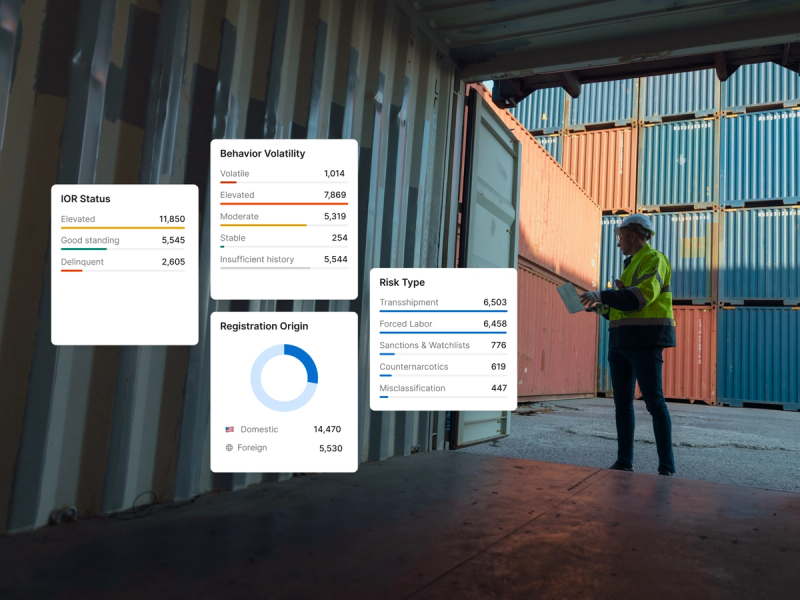
Customs officer inspecting a shipping container with IOR risk cards

Three shifts that change how Customs enforces

  • From transactions → products

    Carry product knowledge across shipments. Validate a good once, monitor it continuously, and stop reconstructing classification, origin, value, and risk at every border crossing.

  • From siloed signals → global supply chain intelligence

    Enrich existing auditing, targeting, and risk selection with product, facility, ownership, and value chain context.

  • From trusted traders → trusted products

    Establish green lanes for trusted goods so enforcement focuses on new, changed, or high-risk shipments.

How it works

How AI trade enforcement works

Real-Time Targeting

01

Enrich customs data with global supply chain and ownership network context.

02

Real-time targeting and triage across identified parties, counternarcotics, security, and revenue risks.

03

Continuous improvement and adaptation through reinforcement learning on inspection results and network monitoring.
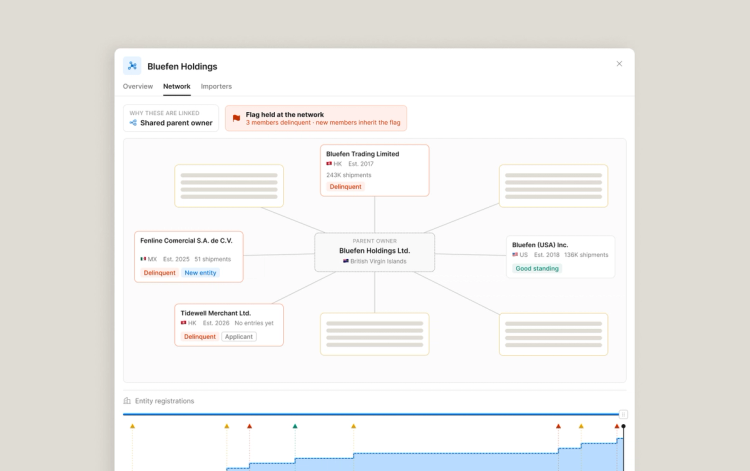
Real-time targeting view in Altana

Intelligent Auditing

01

AI-suggested leads across denied parties, counternarcotics, and revenue risk, each with the evidence behind it.

02

Investigate the network and history of the trade parties, their suppliers, facilities, owners, transactions.

03

AI-enabled reporting to provide targeting summaries and evidentiary packages to inform enforcement action.
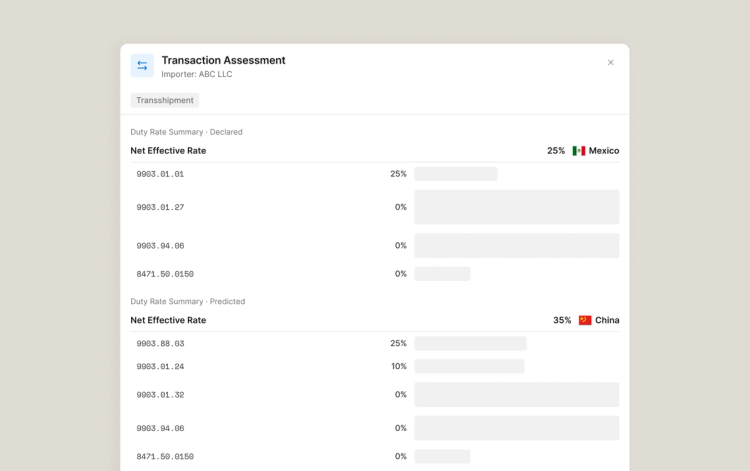
Intelligent auditing view in Altana

Stronger enforcement, lower friction

Customs can have more sovereignty, more enforcement, more collaboration, and more trade — all at the same time. Instead of Customs reconstructing value chains from the entry, importers trace and share them before goods ship. 46% of express shipments are recurring products, reviewed an average of 13.8 times. Pre-validate them once, and officers gain the capacity, and the context from verified value chains, to target what’s actually risky.

More trusted goods → less repeat review → more capacity and richer context for enforcement → more reason for industry to share.

The network

Powered by an AI network

No single agency can trace global value chains alone. Altana’s Supply Chain Graph powers a shared, continuously updated system of record for how products are sourced, manufactured, and moved – the world’s most complete map of the global supply chain network.

Roughly half of its connections come from exclusive learnings from a global network of industry data – available nowhere else. Power your border operation with a sweeping view of the companies, ownership, commodities, supply chain relationships, and risk across the global network. Then, fuse your own sovereign data to unify the picture.

Real-world results

Real results for trade enforcement

63%

better customs accuracy vs human brokers, 90x faster

160%

increase in duty collection

52%

targeting hit rate on high-confidence targets

90%

faster targeting package generation

The network for trusted trade.

Join the network thousands of U.S. CBP officers use to strengthen enforcement and recover revenue.