Even as today’s trade policy prioritizes governance, regulation, economic security, and resilience, an Altana analysis demonstrates how seemingly modest amounts of directly disrupted trade cascade through the global supply chain network into hundreds of billions or even trillions of dollars of critical products.
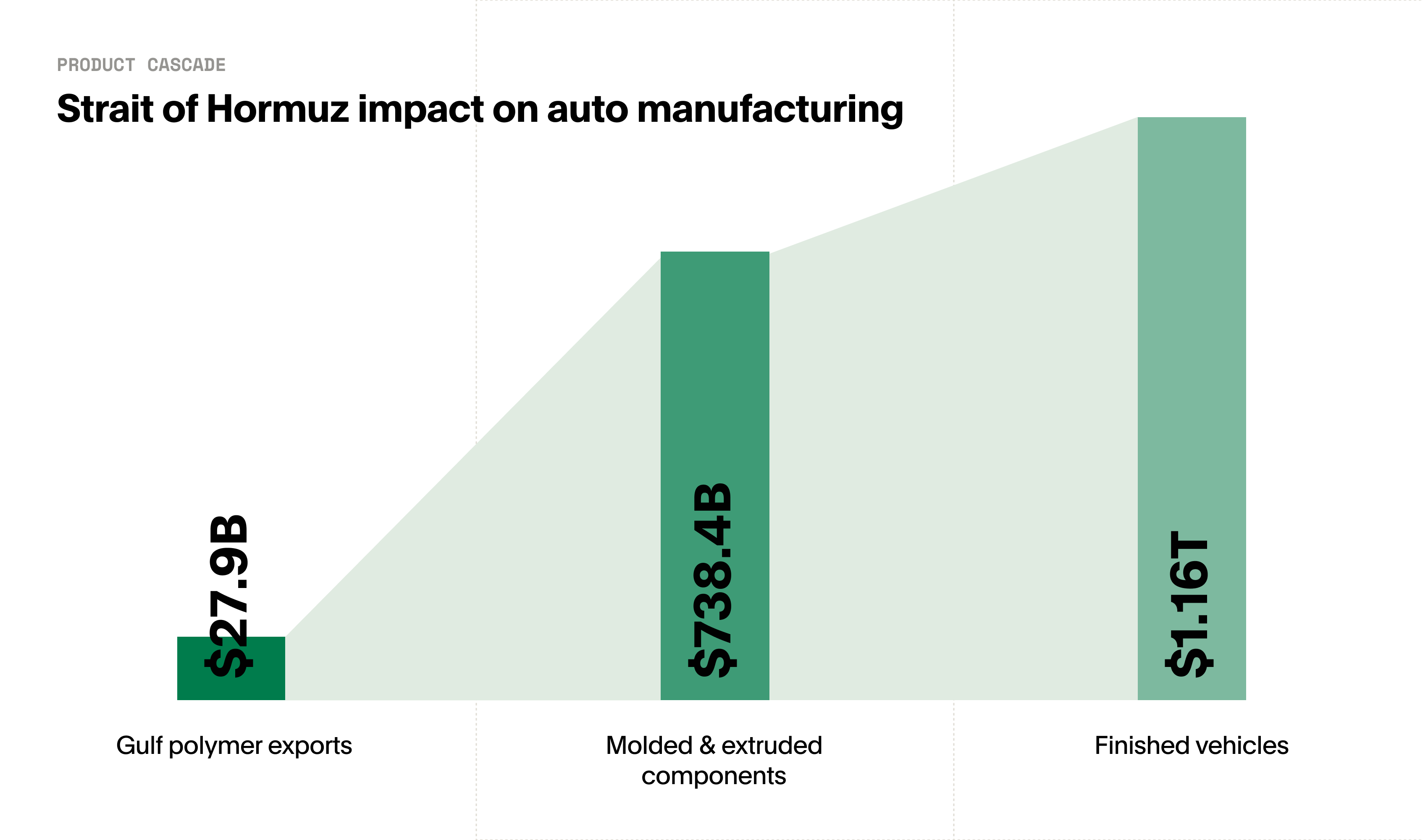
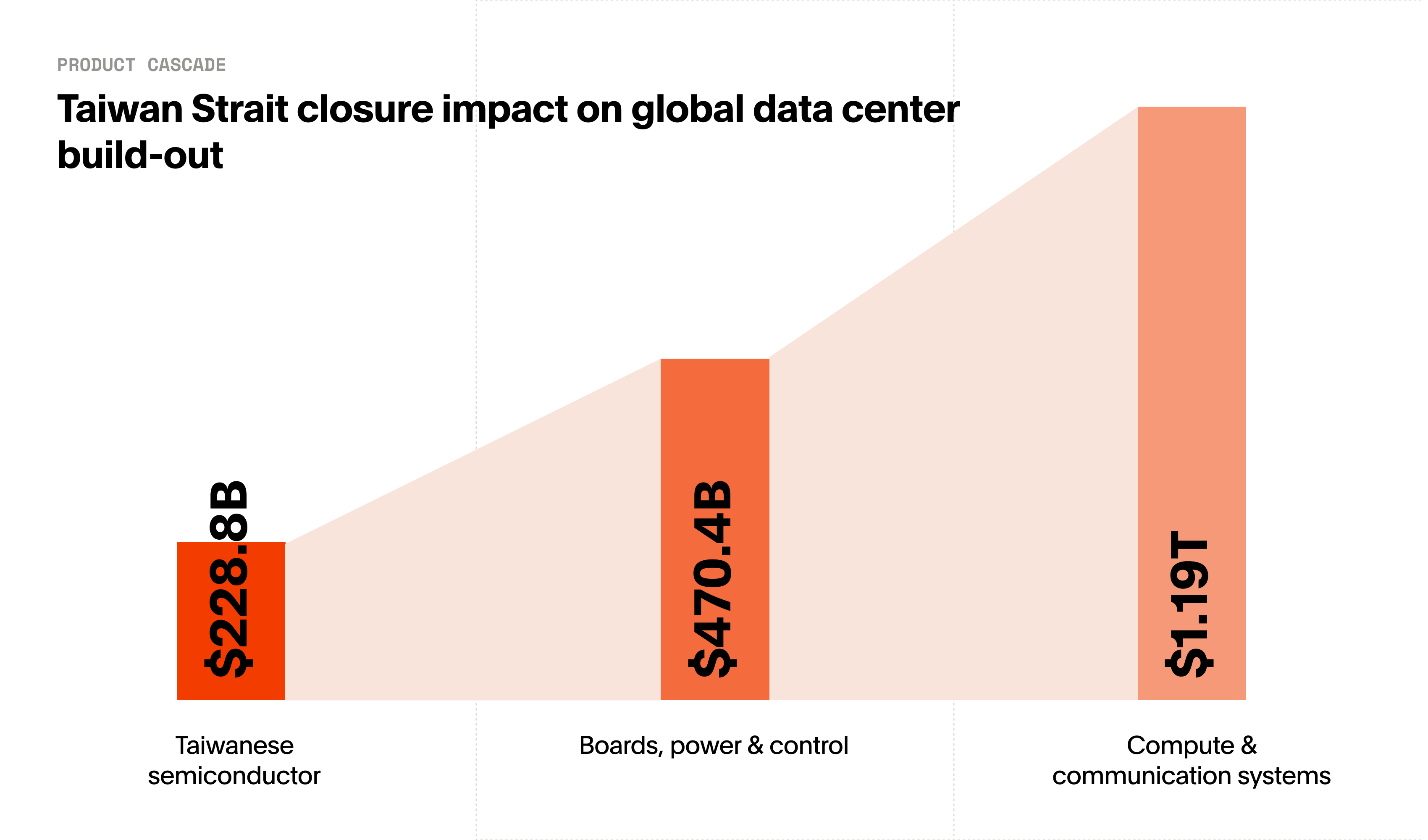
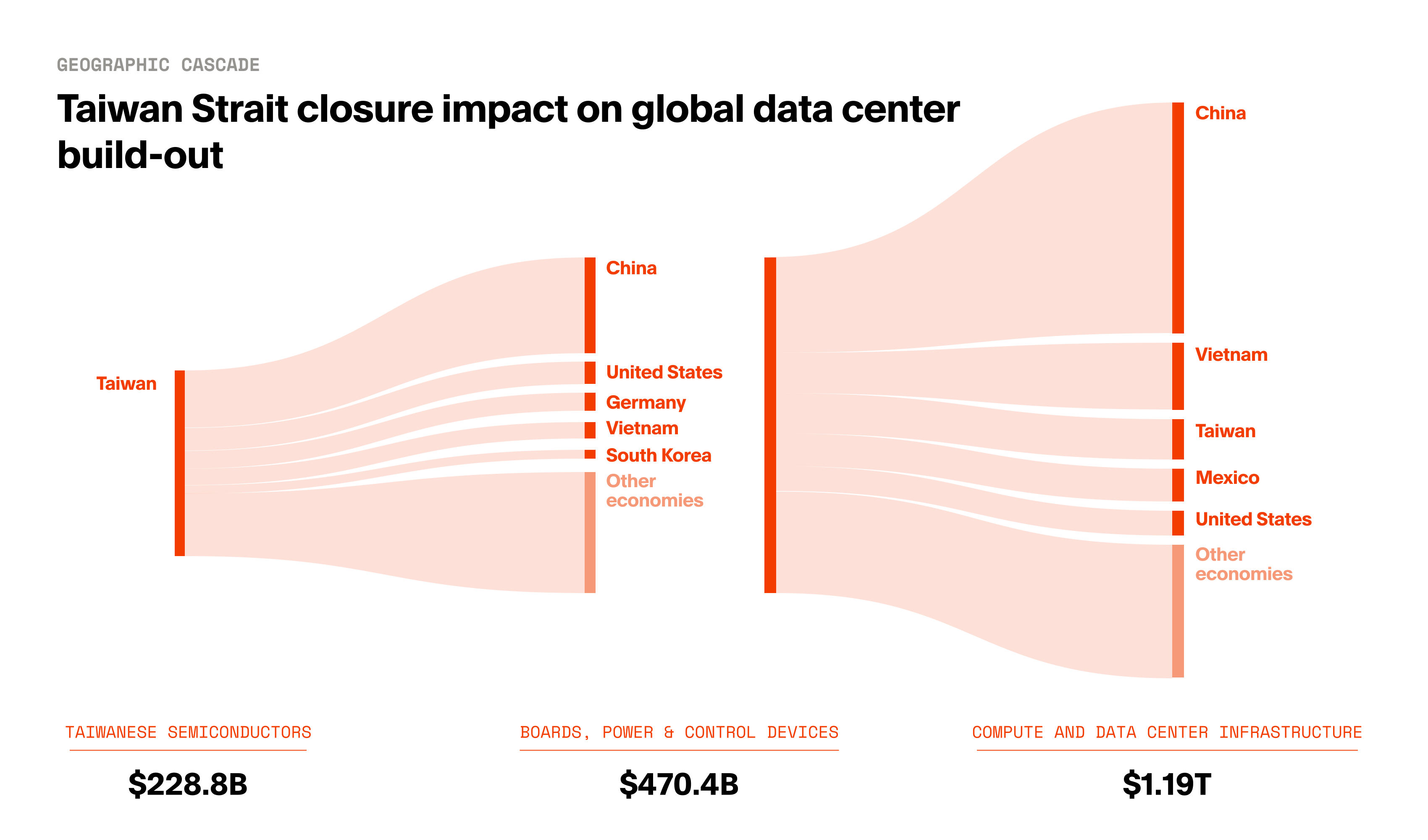
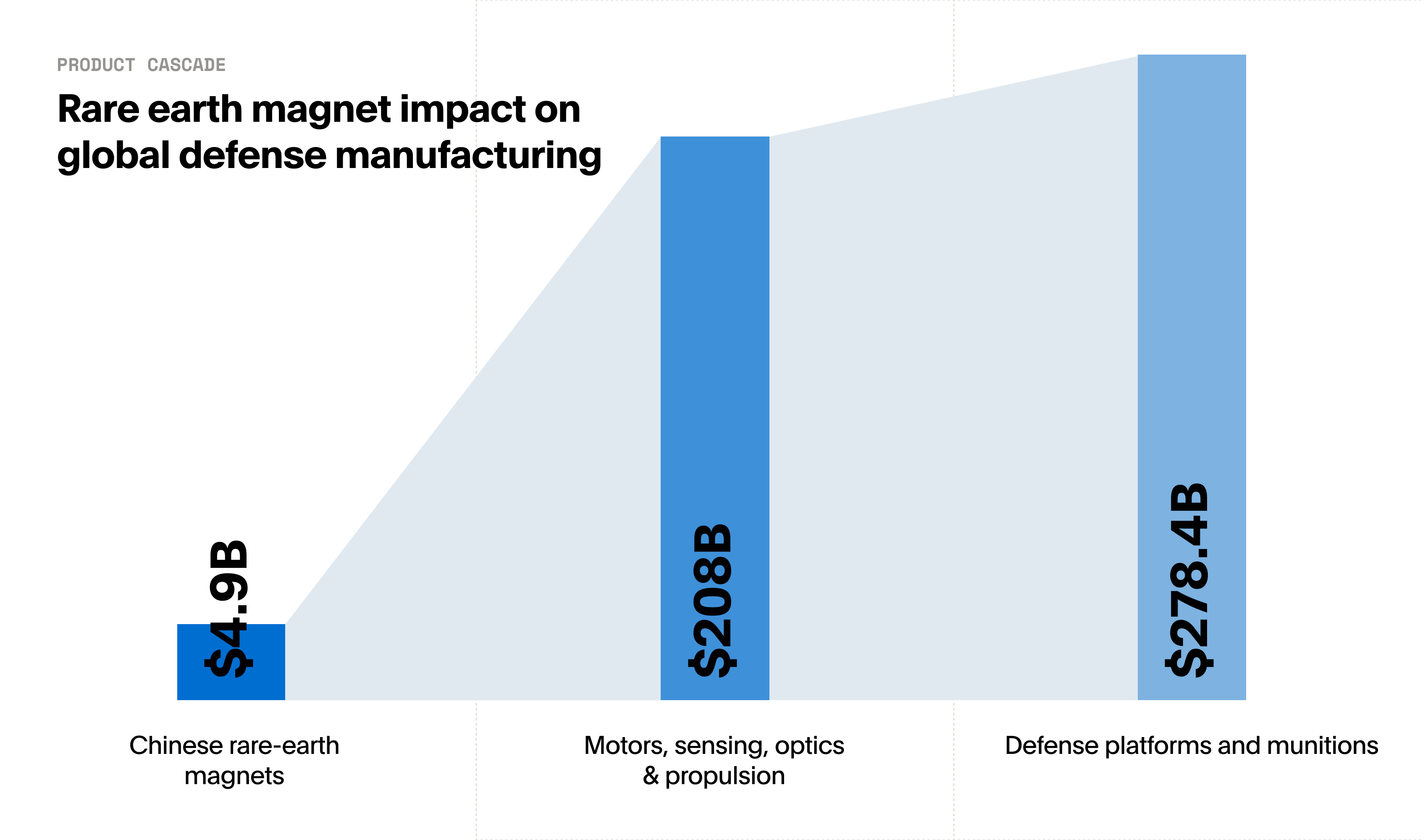
The analysis evaluated trade networks that run through three major geoeconomic chokepoints — the Strait of Hormuz, the Taiwan Strait, and Chinese export restrictions on rare earths and critical minerals. The analysis found that $27.9 billion of Gulf-region exports of ethylene and propylene polymers that traverse the Strait of Hormuz feeds $1.16 trillion of global auto trade; that a disruption of $228.8 billion of Taiwanese semiconductors and related devices would imperil the production of $1.19 trillion of finished compute and communications systems; and that just $4.9 billion of export-restricted Chinese rare-earth magnets are needed to produce $278.4 billion of vital defense applications.
The analysis further found that for all these chokepoints and downstream end products, a vast network of intermediary components, parts, and sub-manufacturing is also affected. These findings come as global governments and their domestic industries balance goals to surge manufacturing with heightened restrictions on upstream product inputs:
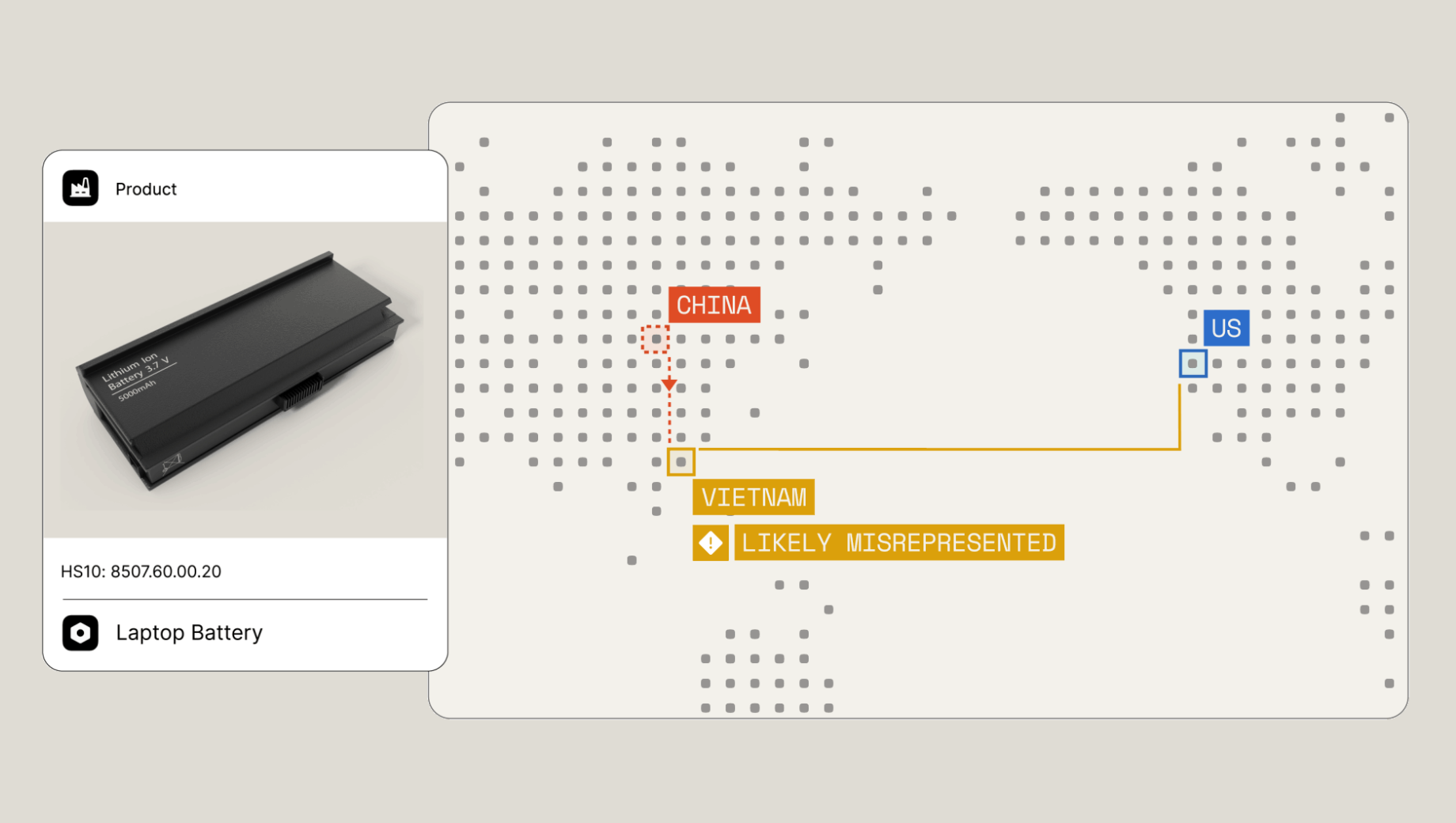
Governments and critical industries can simulate these policy actions and possible disruptions in Altana to identify critical dependencies, understand where they hold leverage, and evaluate where to intervene. The analysis below shows how disruption at three major chokepoints could propagate through the global product and supply chain network into vital downstream products.
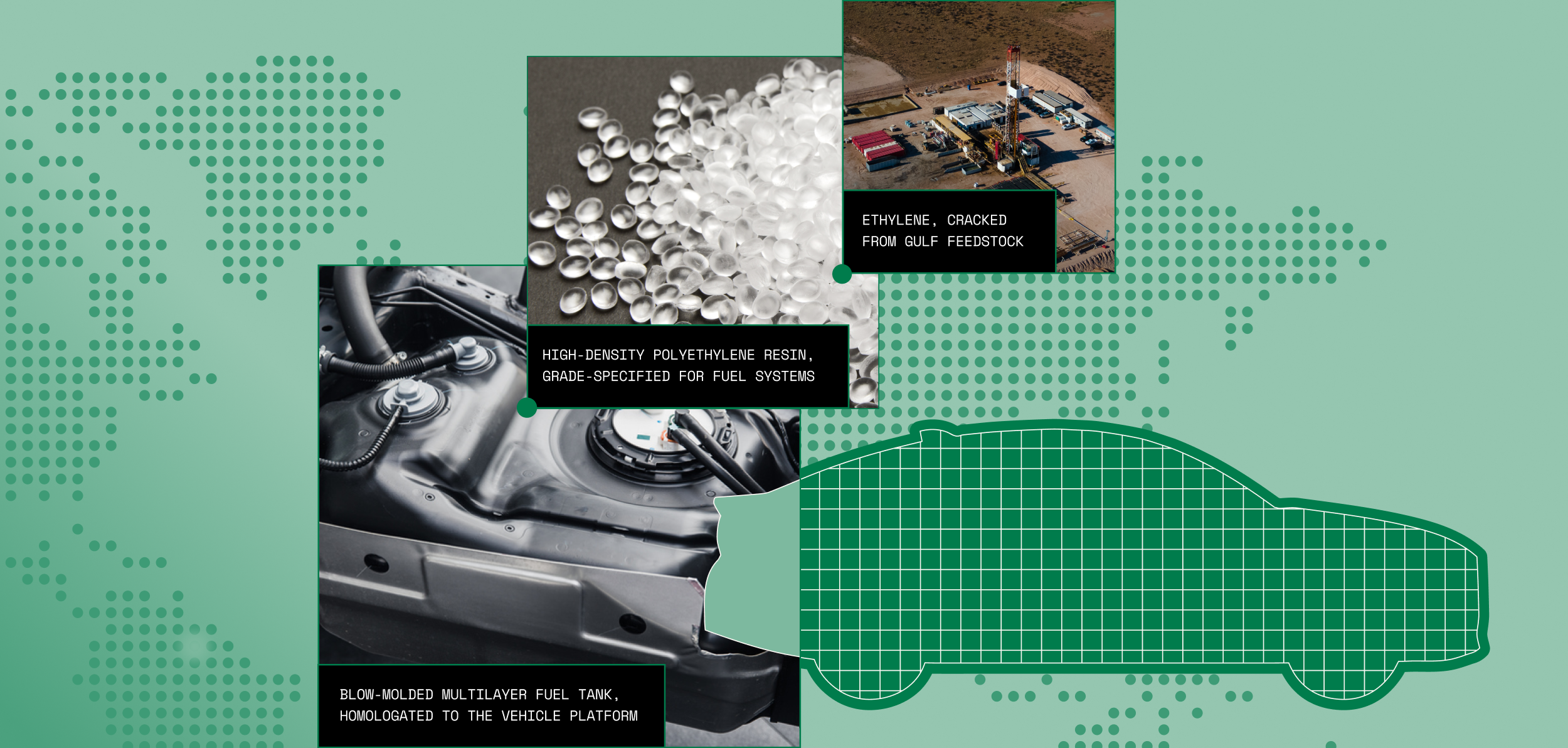
Hormuz: Overlooked petrochemicals imperil automotive manufacturing in North America and Europe
Disruption in the Strait of Hormuz reaches well beyond energy markets, imperiling hundreds of billions of dollars of global automotive manufacturing and raising vehicle costs through a petrochemical trade that is not often associated with carmaking.
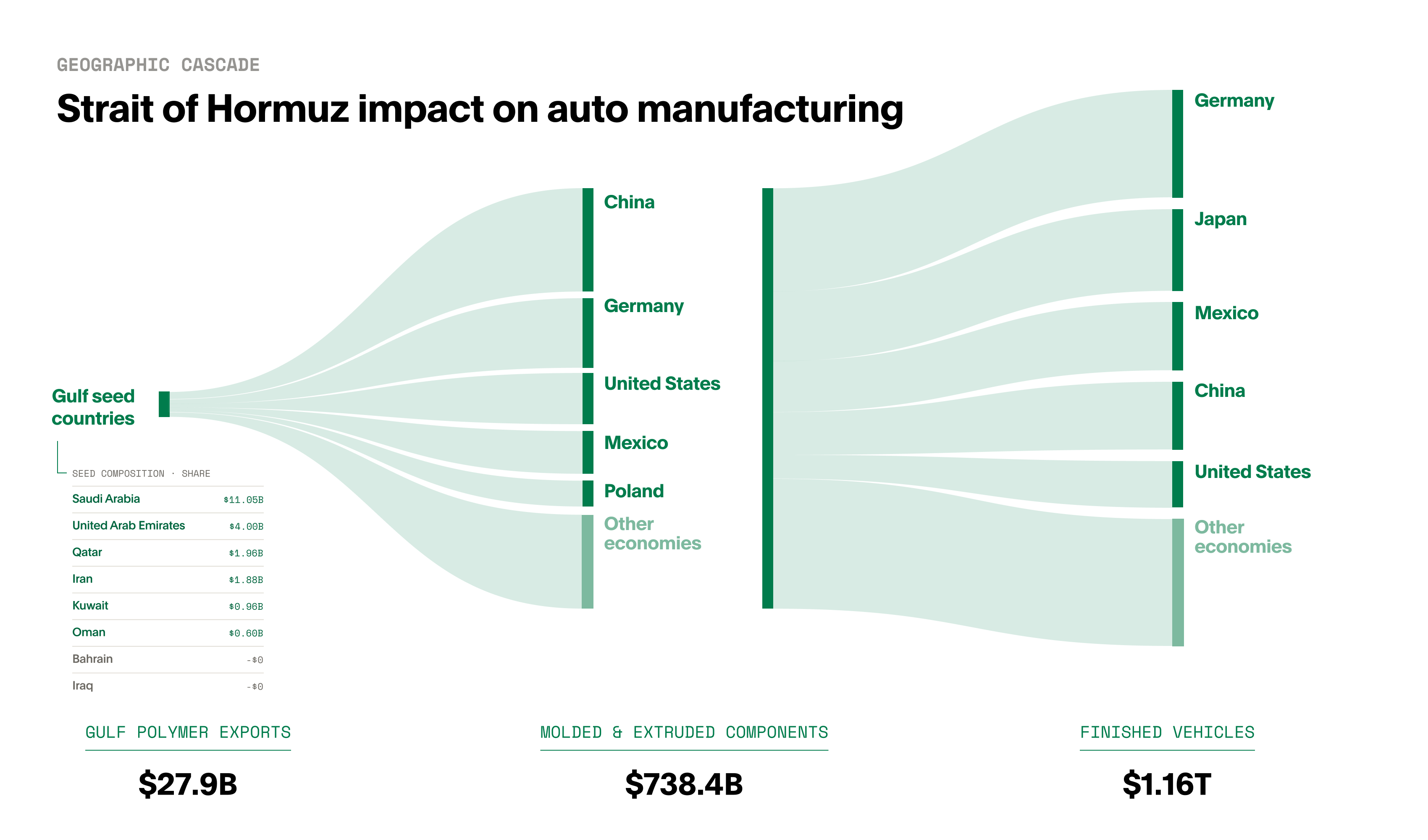
The analysis values Gulf exports of ethylene and propylene polymers — the feedstocks behind nearly every plastic part in a vehicle — at $27.9 billion per year. Saudi Arabia and the United Arab Emirates alone account for nearly four-fifths (79%) of that trade.
$27.9B Gulf polymer exports
$227.1B Value of disrupted North American auto products
$182.4B Value of exposed German automotive products
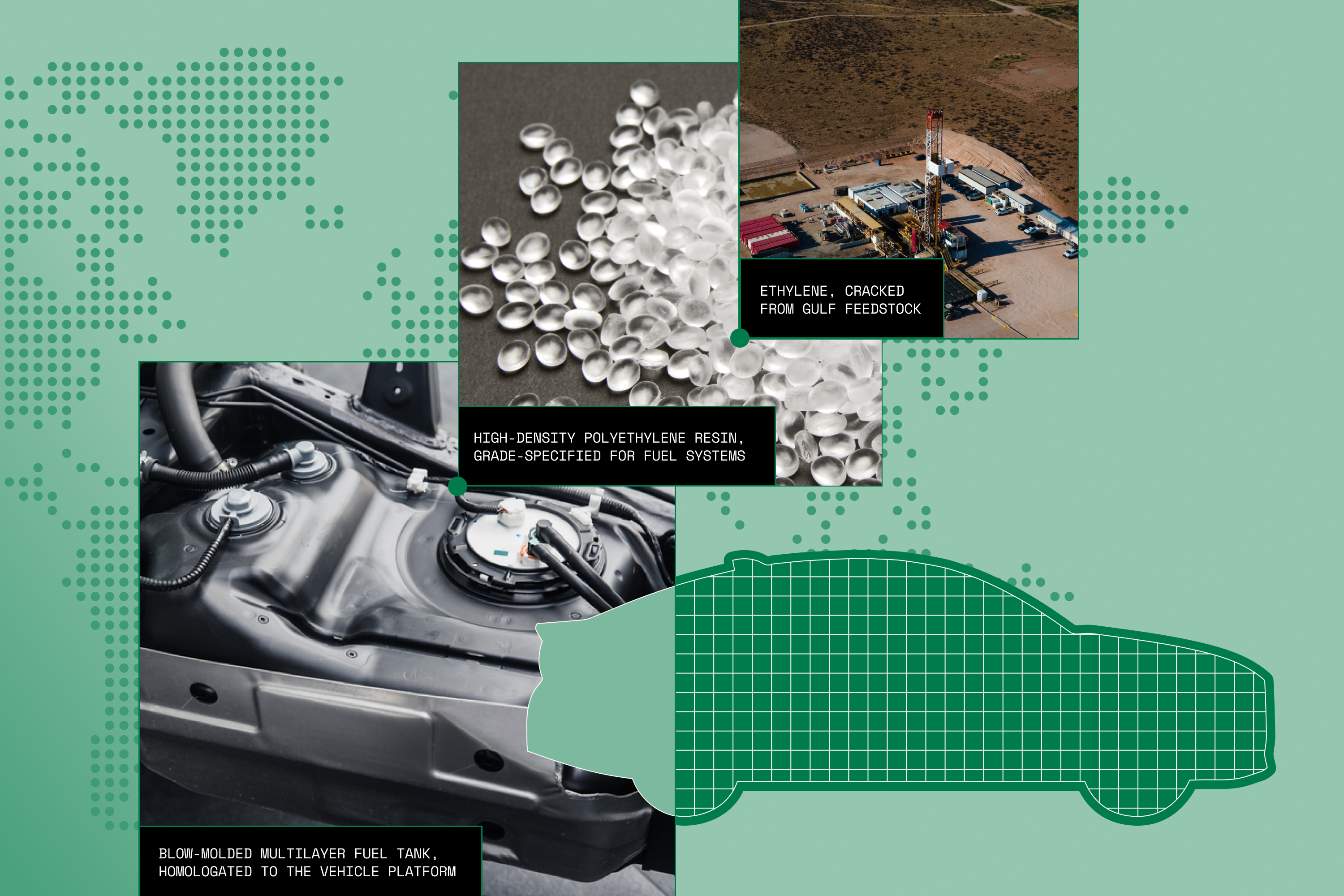
But if a government could trace geopolitical disruptions forward to the specific parts and automotive production it would idle, a fuel-tank shortage would become visible months before it arrived. With this lead time, policymakers would be able to weigh tapping into strategic reserves against expedited re-approval, or proactively propose coordination with the trading partners that share a similar automotive production system to keep manufacturing humming and prevent consumer price spikes.
Taiwan: A strait blockade cascades into global electronics and the AI data center build-out
The analysis values Taiwan’s exports of semiconductor devices and integrated circuits — which are foundational pieces of modern electronic devices — at $228.8 billion per year. This makes up nearly half the value (43%) of Taiwan’s total exports.
$228.8B Total Taiwanese semiconductor exports
43% Semiconductors' share of Taiwan's total exports
$1.19T Downstream data center hardware affected
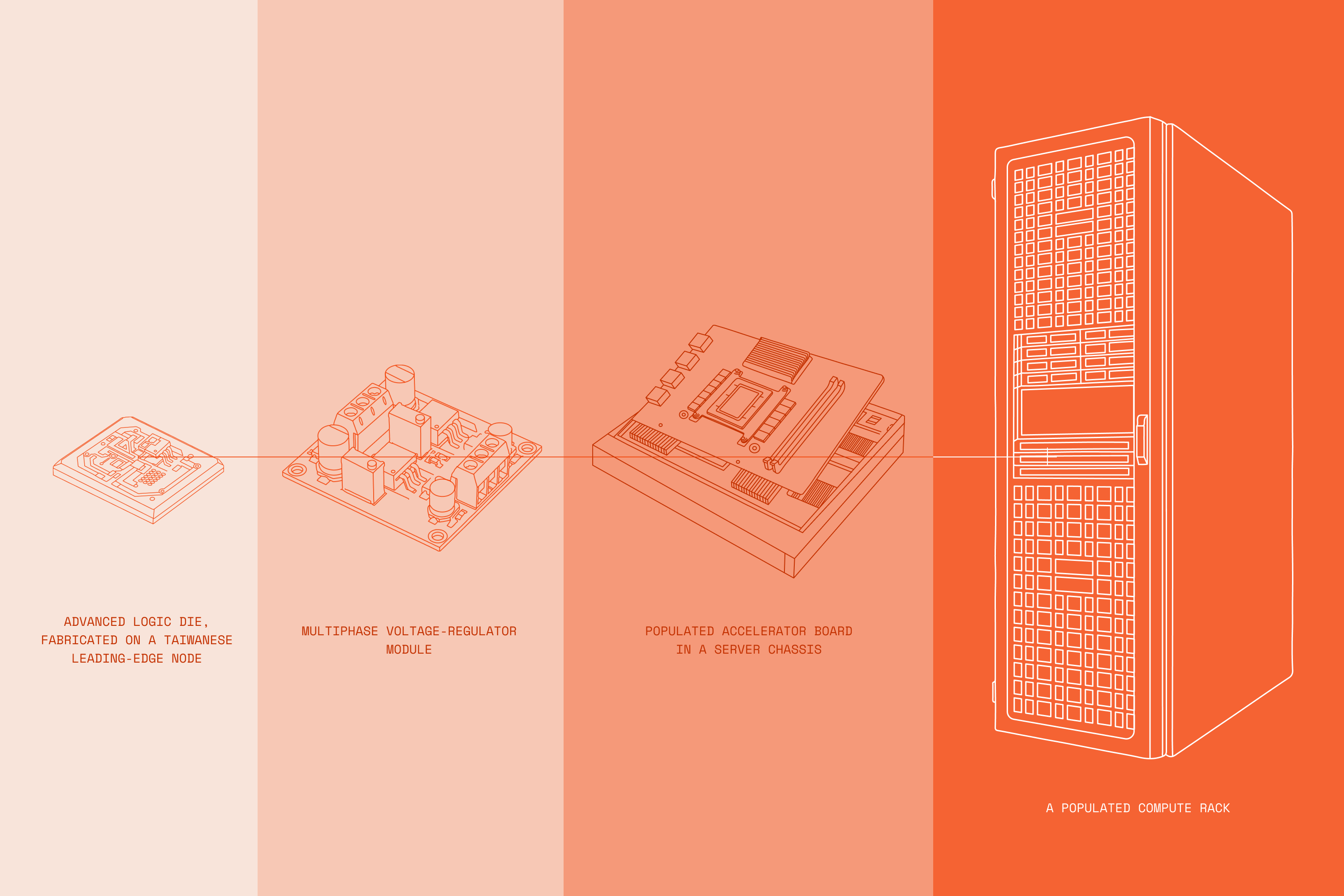
The voltage-regulator module is then shipped to a plant in Mexico or Vietnam, where it becomes a component within a populated accelerator board in a server chassis. This finished server chassis becomes a rack that is installed in a multi-billion dollar U.S. data center. Scaled across the world, for thousands and millions and billions of racks and servers and routers, losing access to the advanced logic dies would choke off trillions of dollars of trade, manufacturing, and investment in the AI boom.
Conversely, if a government could map the network of production its own data center buildout depends on, it could aim economic incentives at the most necessary and hard-to-source electronic components. Policymakers could also test and verify — before committing funds — that new, domestic plants would build resilience.
Policy flashpoint: Rare earth restrictions rattle defense and aerospace as rearmament accelerates
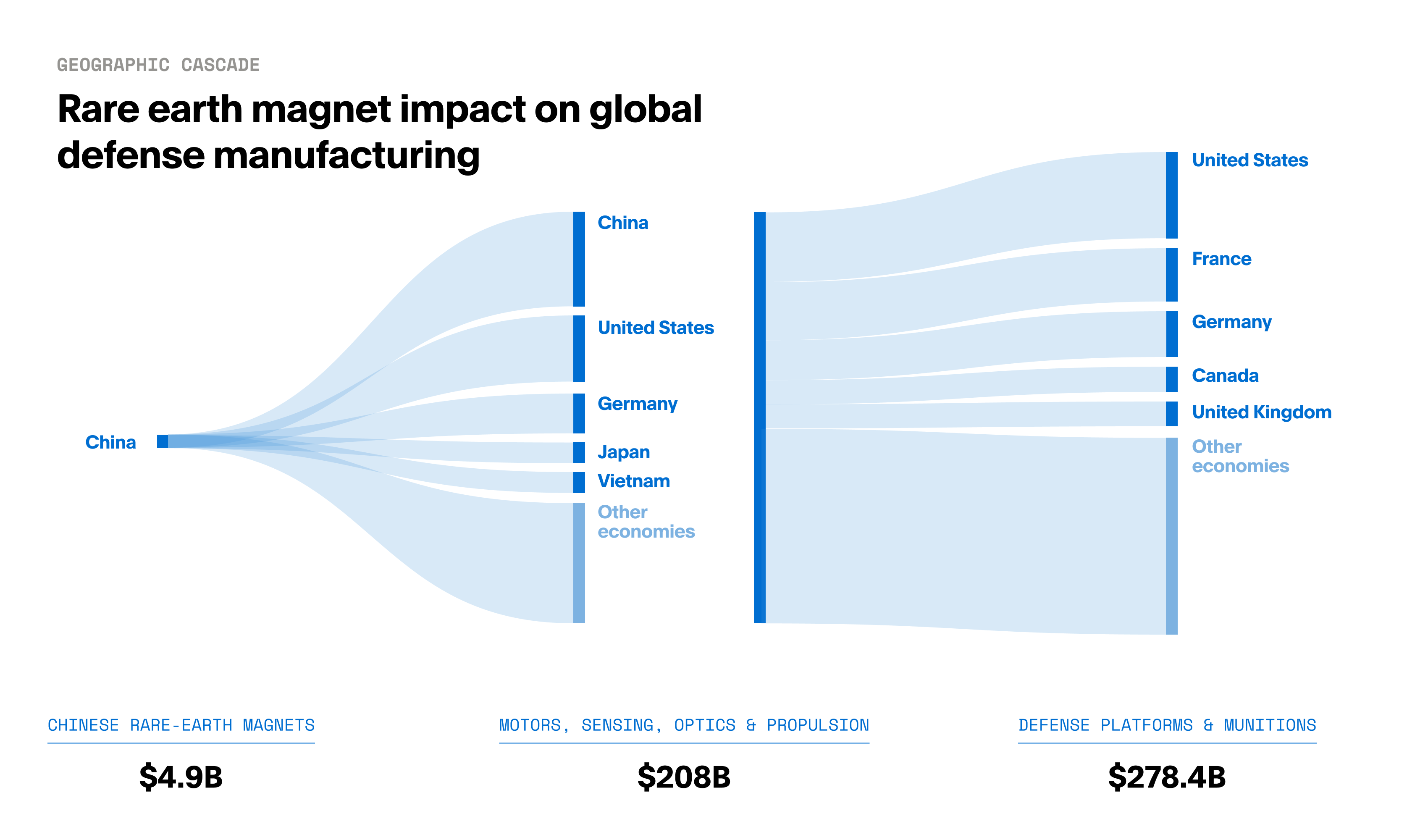
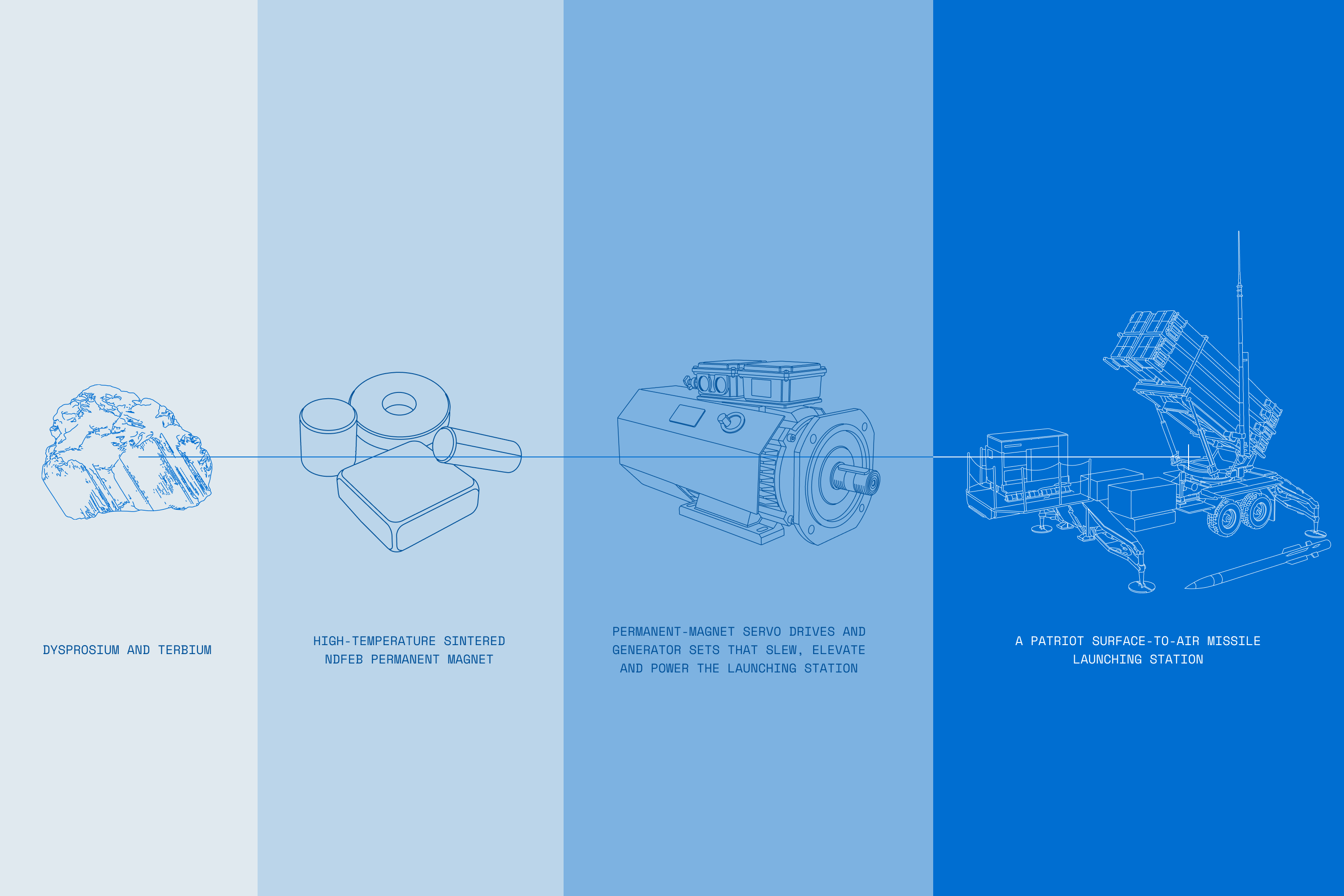
The analysis values China's exports of permanent magnets — the components that turn electrical power into physical motion — at only $4.9 billion per year. This is the smallest of the evaluated chokepoints and the most concentrated, as China accounts for more than two-thirds (67%) of all permanent-magnet exports worldwide.
$4.9B Chinese magnet exports
67% China's share of global permanent-magnet exports
57X Amplification into defense and aerospace
Without access to even a modest amount of rare earths and magnets, then, the missile launcher — and the global defense network’s production of other vital applications — sputters and fails.
On the other hand, if a government could see the exact tiers of production where its defense programs depend on restricted magnets, it could invest in alternative suppliers for the specific components that carry the dependency. The government could also identify the raw materials or vital components that its own domestic industry or allies’ industries are already sourcing or making to better coordinate production.