Key takeaways
Altana builds product value chains grounded in component truth — a traceable record of where a product's materials come from, how they're transformed, and which suppliers and facilities were involved. This gives trade teams a dynamic system of record to navigate regulations and enforcement that has shifted upstream into a product's components and materials.
- Trade enforcement has shifted upstream, meaning compliance and assessed duties now depend on what's inside a product, not just what crosses the border.
- Gartner reports that 85% of trade and procurement teams lack visibility into the deep supply chain tiers where threats like single-sourced suppliers, adversarial dependence, and chokepoints are typically buried.
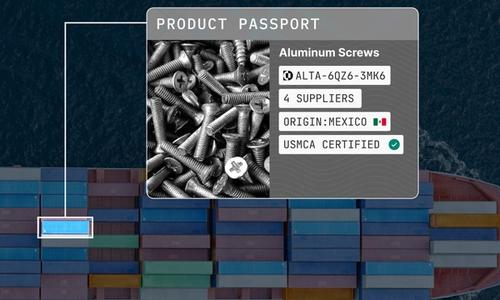
- Altana builds a product value chain for every product in your catalog from three sources: what you already know about your products, suggestions from Altana's AI, and what you learn by collaborating with suppliers through Altana Product Passports.
- Altana's AI draws on the largest map of the global supply chain, the Altana Knowledge Graph, which combines public data like bills of lading and customs declarations, commercial data from partners such as Moody's, and proprietary transaction-level data from Maersk and other logistics providers.
See How One Manufacturer Accessed Component Truth and Identified $615M in USMCA Savings
Learn More- How your Altana catalog centralizes product data that often lives in fragmented systems and spreadsheets
- The three sources of data that Altana uses to build value chains for every product in your catalog
- How Altana’s AI models and collaboration with suppliers via Product Passports establish component truth, flesh out accurate, up-to-date value chains, and allow trade teams to navigate a changing enforcement landscape
A central catalog for your product master data — including multi-tier value chains for every product
Mapping value chains from three sources — including AI suggestions drawn from the largest map of the global supply chain
Value chains as the foundation of advanced trade compliance workflows
FAQs
Component truth is the defensible integrity of a product's story — where its materials originate, how they are transformed, and whether those determinations hold up under enforcement scrutiny. It matters because trade enforcement now depends on what's inside a product, so a product value chain is only as strong as the component truth within it.
A product value chain in Altana is a structural, visual map of how a product is sourced, manufactured, and moved around the world, charting the parts and components that funnel into a product and how they transform along the way. It extends from the product to Tier 1, Tier 2, Tier 3 suppliers and beyond, tracing inputs back to raw materials and forward to the finished good.
Altana builds product value chains from three sources: the information you already know about your products, suggestions from Altana's AI based on transaction evidence in its Knowledge Graph, and what you learn by collaborating with suppliers through Altana Product Passports. Together these sources create a living record of where a product comes from that evolves as sourcing and manufacturing change.
Altana's AI identifies likely upstream relationships using transaction evidence in the Altana Knowledge Graph and suggests which suppliers, components, and facilities exist in a product's value chain. It provides the specific supporting transactions as evidence, including details like HS codes and transaction dates, so you can review and add suggestions to your catalog if you agree.
Threats to product-line resilience — such as single-sourced suppliers, adversarial dependence, and chokepoints — are typically buried tiers deep in supply chains, where Altana reports 85% of trade and procurement teams lack visibility. Because enforcement of tariffs, forced labor laws, and sustainability rules has shifted upstream, teams need to see every tier to remediate compliance risks, calculate tariff exposure, and establish resilience.