
Key takeaways
Altana's analysis of global supply chain data shows that the expanded 2025 Section 232 tariffs on steel and aluminum derivatives will hit 15 times as many U.S. companies as the 2020 national security tariffs. With further Section 232 investigations underway on semiconductors, critical minerals, polysilicon, and drones, companies need product-level visibility into every tier of their value chains to quantify and manage exposure.
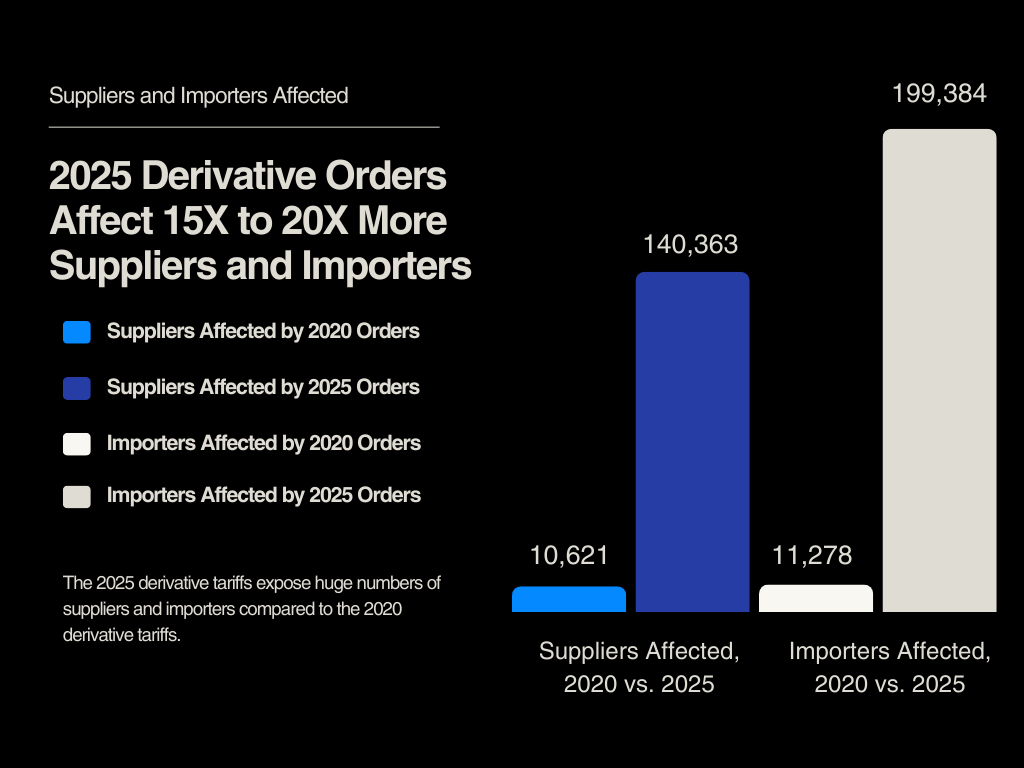
- The expanded 2025 Section 232 tariffs on steel and aluminum derivatives will strike 15 times as many U.S. companies as President Trump's 2020 national security tariffs, according to Altana's analysis of global supply chain data.
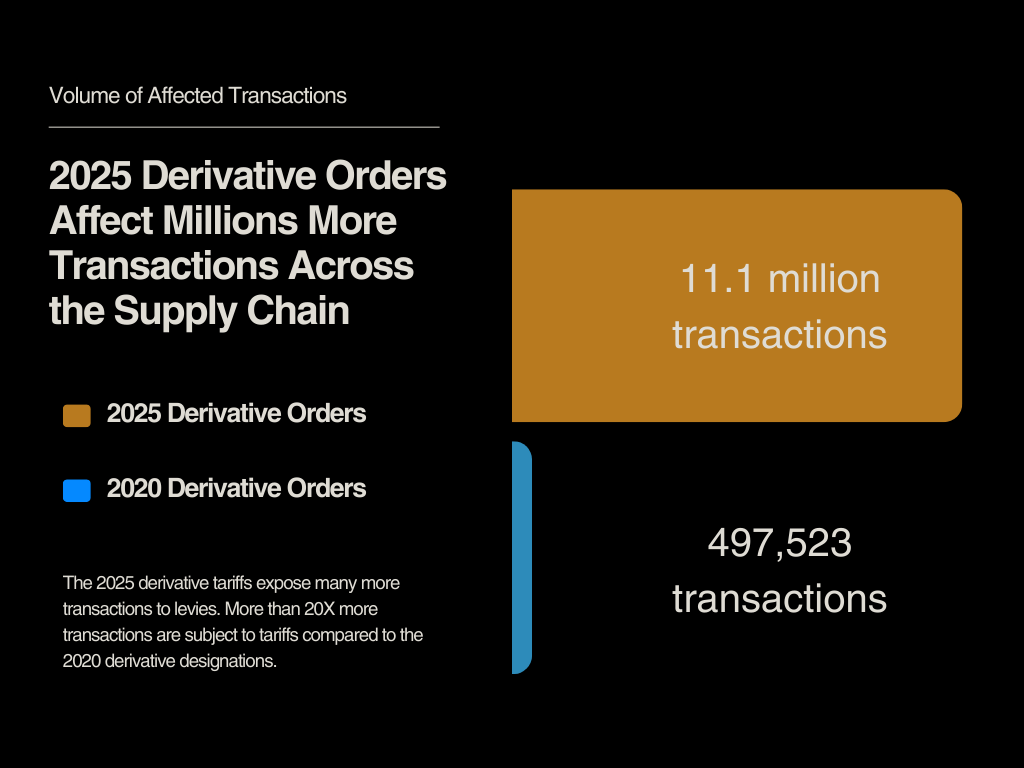
- In 2024, nearly 200,000 U.S. companies conducted more than 11 million import transactions of steel and aluminum derivative articles subject to the new 2025 tariffs, compared to about 11,000 companies and 500,000 transactions under the 2020 levies.
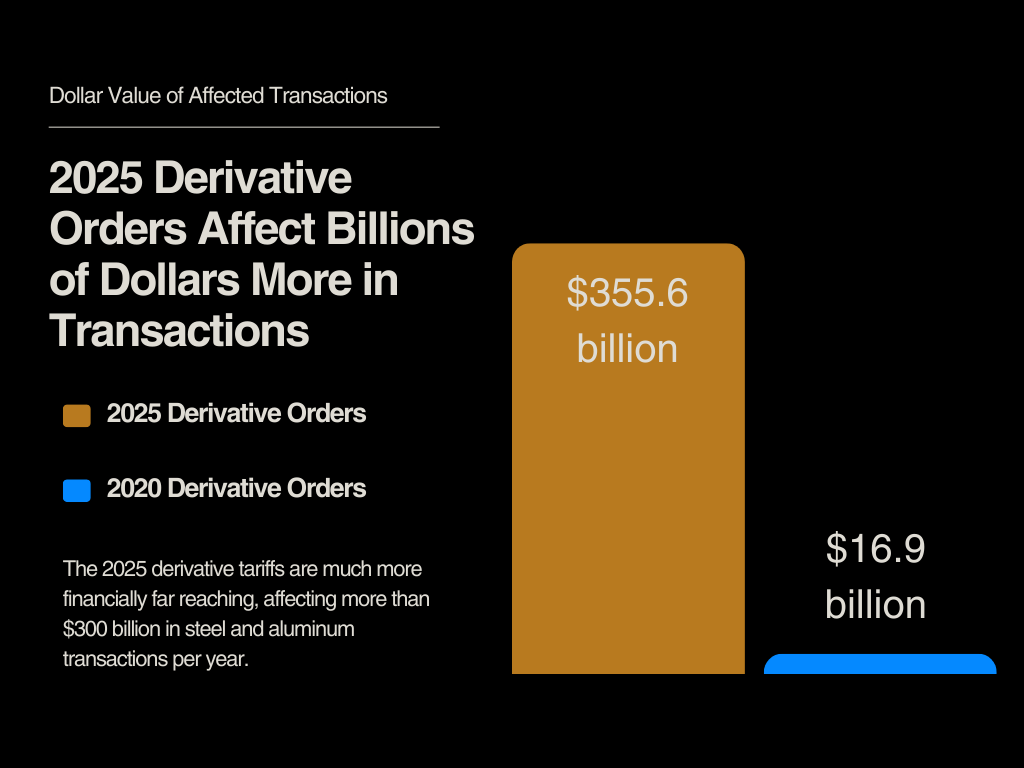
- Import transactions newly exposed to the 2025 derivatives tariffs were valued at more than $350 billion, compared to $17 billion under the 2020 tariffs, Altana found.
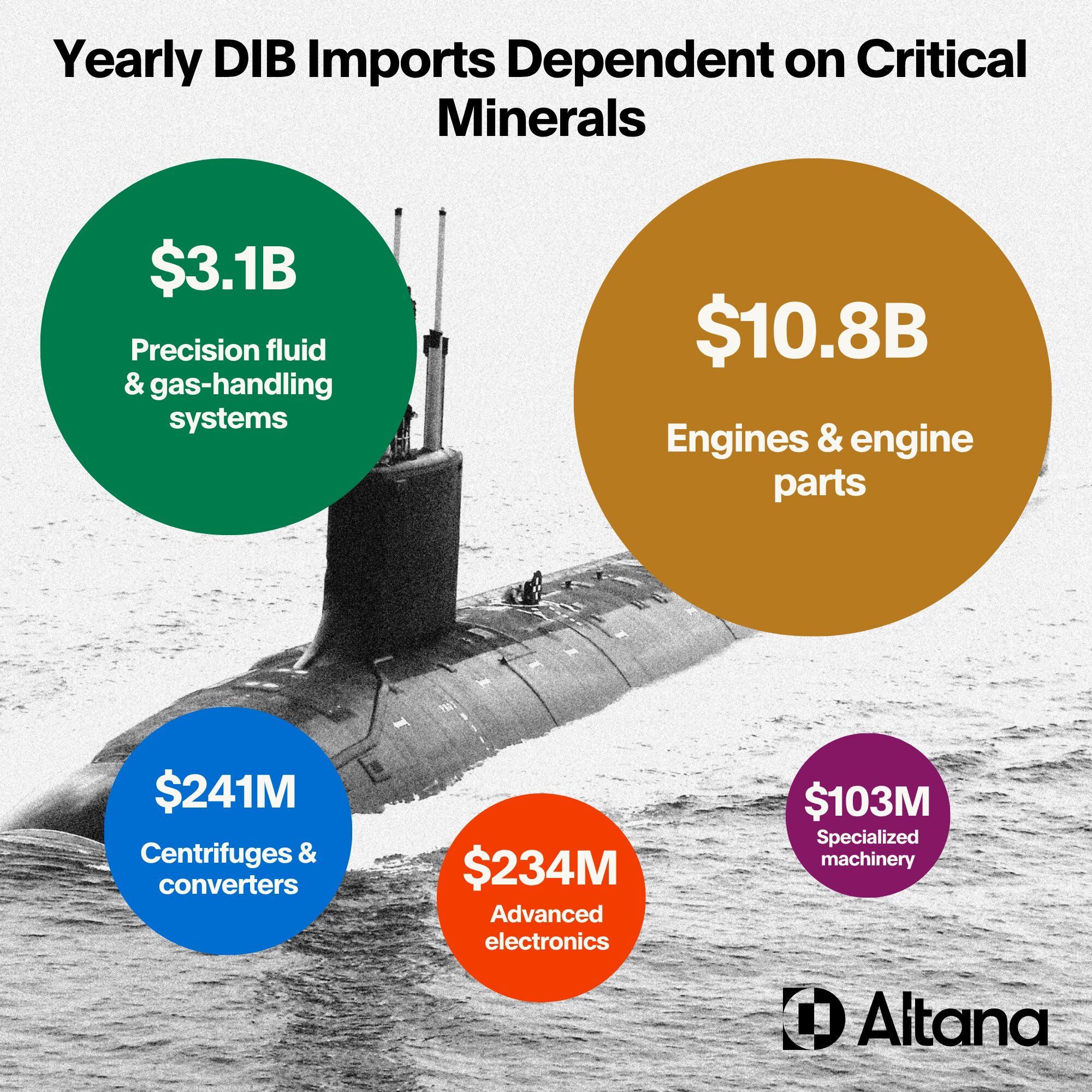
- Ongoing Section 232 investigations into critical minerals, semiconductors, polysilicon, and drones could raise tariffs on inputs vital to American supply chains, with $14.2 billion of U.S. defense prime imports in 2024 containing critical minerals in their product value chains.
2025 steel and aluminum derivatives tariffs rattle extended supply chains, especially automotives
Ongoing Section 232 investigations threaten high tariffs on additional products, components derivatives, and industries

- If the administration does impose additional Section 232 tariffs, will certain industries, or certain types of components or products, receive exemptions?
- Will imports of specific product components be subject to a form of percentage-based levies on semiconductors, polysilicon, and critical minerals content?
- And how will quantifying and mitigating exposure to a complex swirl of levies, export controls, and other resilience risks be possible with so much of the exposure present upstream, in Tier 2, 3, and beyond in value chains?
Navigate Section 232 tariffs with Altana's Product Network
- Visualize and analyze your value chain connections, identifying hidden relationships and risks.
- Collaborate with partners across your value chains to build more resilient, compliant, and cost-effective product lines.
- Request, share, and link product information across your supplier network to build traceability upstream and downstream, saving time gathering product information, resolving risk by adding proof of compliance.
Mastering Tariffs With Altana's Tariff Scenario Planner
- Pinpoint exposure: See the precise share of your product costs impacted by the new tariffs, down to the shipment level.
- Prioritize supplier relationships: Identify which suppliers pose the highest cost risk, so you can execute the right diversification strategy.
- Find alternative sources faster: Search for qualified suppliers outside of affected trade lanes to reduce risk and maintain supply continuity.
FAQs
The 2025 Section 232 tariffs expand national security levies to downstream steel and aluminum goods such as metal furniture and furniture frames, screws and bolts, pre-fabricated structural steel, aluminum baseball bats, aircraft parts, cargo trailers, insulated electric conductors, and door hinges. For finished products, importers must pay a levy on the declared value of the steel and aluminum content. This goes well beyond the 2020 tariffs, which covered items like wire and cable, aluminum auto parts, and nails.
Nearly 200,000 U.S. companies conducted more than 11 million import transactions of steel and aluminum derivative articles subject to the new 2025 tariffs in 2024, according to Altana's analysis. That is 15 times as many companies as the roughly 11,000 affected by the 2020 national security tariffs. Those transactions were valued at more than $350 billion, compared to $17 billion under the 2020 levies.
The auto industry is hit hardest, as the largest U.S. importer of aluminum products. Companies in scientific manufacturing, civil engineering, mining, transportation manufacturing, and hardware and plumbing are also affected. Because the tariffs apply to steel and aluminum content within final products, businesses are exposed even if they don't import raw metal.
The U.S. launched Section 232 investigations into foreign critical minerals and semiconductors in April 2025, and into drones, drone components, and polysilicon in July 2025. These investigations could lead to higher tariffs on inputs and components vital to electronics, defense, automotive, and other American supply chains. Much of the exposure sits upstream, in Tier 2, Tier 3, and beyond.
Altana's Tariff Scenario Planner helps companies see the precise share of their product costs impacted by the new tariffs, down to the shipment level. It is built on a company's own product networks rather than fragmented data, so teams can identify which suppliers pose the highest cost risk and find qualified alternative suppliers outside affected trade lanes. This product-level visibility across every tier lets enterprises quantify risk and adjust sourcing before disruption hits.


