
Key takeaways
The United States placed 25% tariffs on imports from Canada and Mexico, effective March 4, 2025, scrambling the highly integrated North American auto parts market. An Altana analysis of thousands of U.S. importers across 22 tariff codes shows billions of dollars in exposure for U.S. auto companies.
- U.S. importers of auto body parts face $24.8 billion in exposure under the new 25% tariffs on Canada and Mexico, the single hardest-hit component category in Altana's analysis.
- Brakes and brake parts carry $12.8 billion in tariff exposure for U.S. importers, with more than 600 importers relying on these components.
- Altana analyzed value chain data for thousands of U.S. importers across 22 six-digit tariff codes covering 2024, spanning components from spark plugs and wipers to brakes, suspension systems, and shock absorbers.
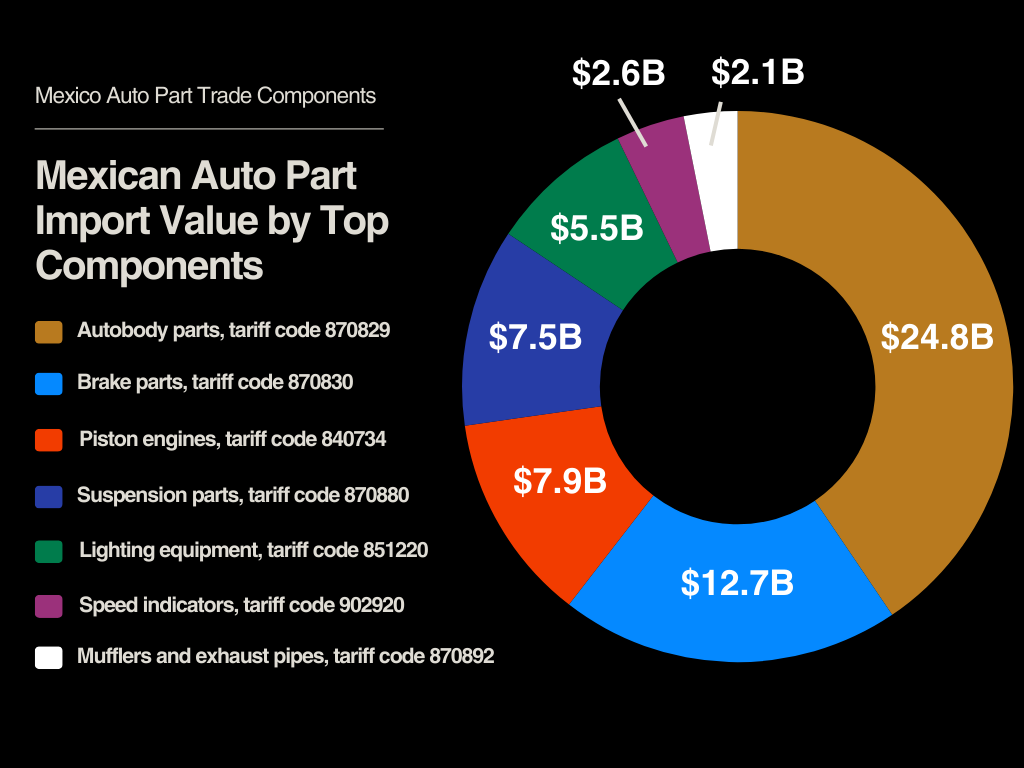
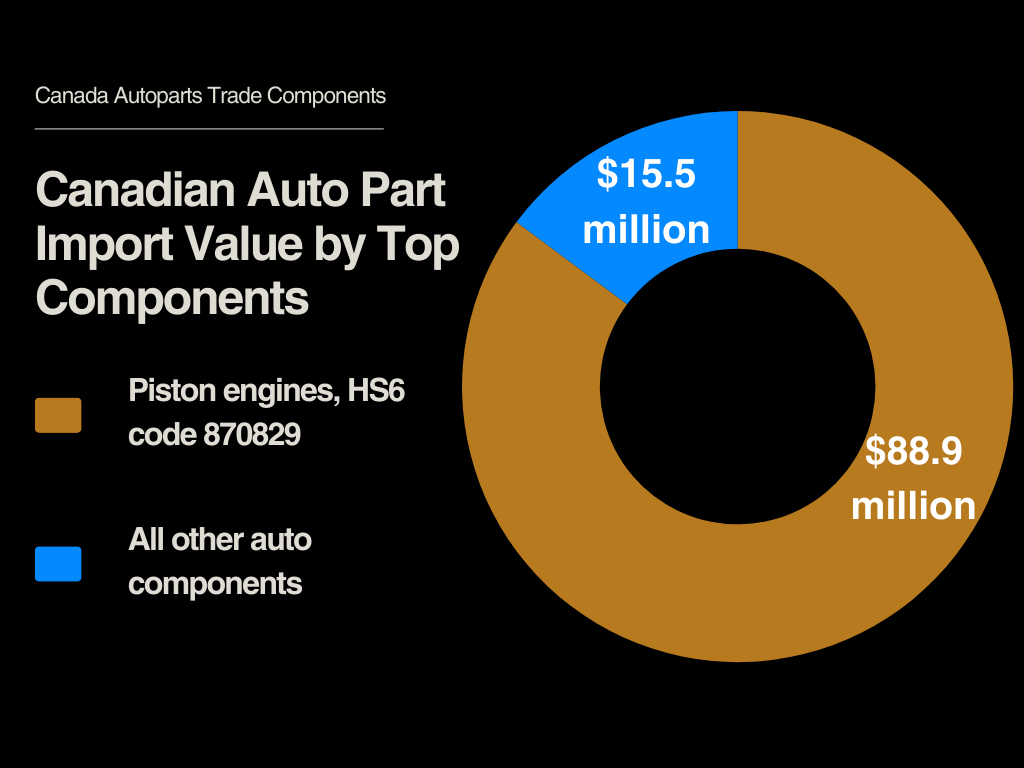
- The Mexico-to-U.S. auto trade lane is more diversified across auto components than the Canada-to-U.S. lane, which is made up mostly of reciprocating piston engines.
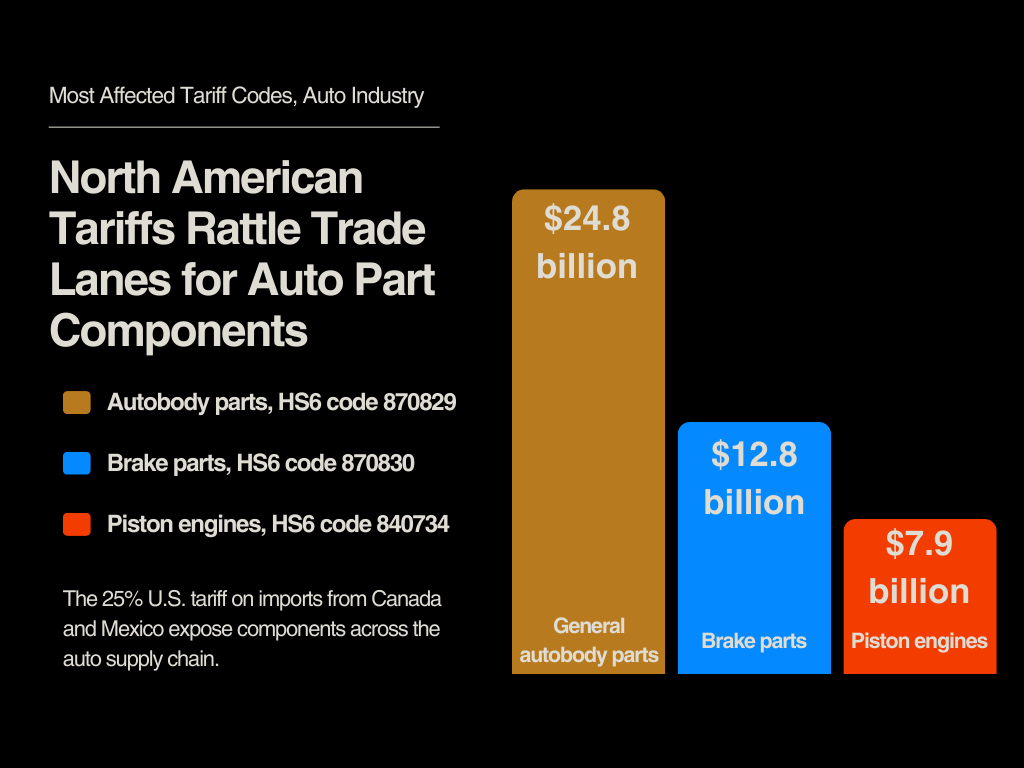
Thousands of Affected U.S. Importers Rely on Range of Auto Components
- A catch-all code for auto body parts ($24.8 billion in exposure, HS6 code 870829)
- Brakes and brake parts ($12.8 billion in exposure, HS6 code 870830)
- Reciprocating piston engines, which convert high temperature and high pressure into a rotating motion ($7.9 billion in exposure, HS6 code 840734)
Mastering Tariffs With Altana's Tariff Scenario Planner
- Visualize and analyze your value chain connections, identifying hidden relationships and risks.
- Collaborate with partners across your value chains to build more resilient, compliant, and cost-effective product lines.
- Request, share, and link product information across your supplier network to build traceability upstream and downstream, saving time gathering product information, resolving risk by adding proof of compliance.
- Pinpoint exposure: See the precise share of your product costs impacted by the new tariffs, down to the shipment level.
- Prioritize supplier relationships: Identify which suppliers pose the highest cost risk, so you can execute the right diversification strategy.
- Find alternative sources faster: Search for qualified suppliers outside of affected trade lanes to reduce risk and maintain supply continuity.
FAQs
The 25% tariffs on Canada and Mexico expose U.S. auto importers to billions of dollars in added costs. Altana's analysis found $24.8 billion in exposure for auto body parts, $12.8 billion for brakes and brake parts, and $7.9 billion for reciprocating piston engines. These three categories alone affect thousands of importers.
The 25% tariffs on imports from Canada and Mexico went into effect on March 4, 2025. U.S. automakers received a one-month reprieve before the tariffs applied to them.
The hardest-hit categories are a catch-all code for auto body parts with $24.8 billion in exposure, brakes and brake parts with $12.8 billion, and reciprocating piston engines with $7.9 billion. The auto body parts code alone involves more than 2,000 importers, while brakes involve more than 600 and piston engines 57.
The tariffs affect thousands of U.S. automakers, engineering facilities, parts suppliers, and repair shops that buy auto components from Canada and Mexico. They will pay more for parts from two of America's largest trading partners, raising costs across the auto value chain.
Altana's Tariff Scenario Planner shows the precise share of product costs hit by new tariffs, down to the shipment level. It helps companies identify which suppliers pose the highest cost risk and find qualified alternative suppliers outside affected trade lanes. The Planner is built on a company's own product-level, multi-tier value chains rather than fragmented data.


