
Key takeaways
Altana analyzed 6.6 million multi-tier transactions across 609 U.S. defense contractors and sub-contractors. The findings reveal widespread upstream exposure to Chinese military entities flagged under NDAA Section 1260H, putting billions of dollars in Department of Defense contracts at risk.
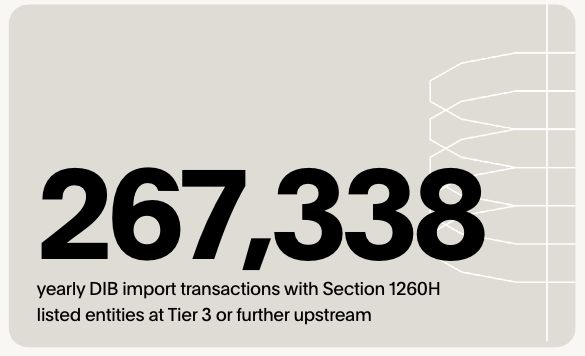
- Altana's analysis found 267,338 import transactions in 2024 where Chinese military entities listed under NDAA Section 1260H were present at Tier 3 or further upstream in U.S. defense contractor value chains.
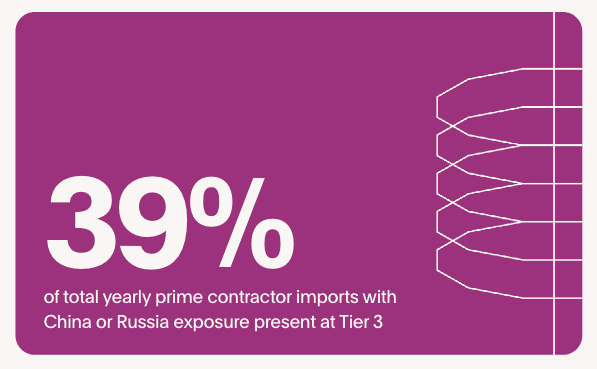
- 39% of U.S. defense prime contractor imports in 2024 had exposure to suppliers in China or Russia at Tier 3 or beyond, driven largely by China's control of critical minerals and permanent magnets used in military applications.
- Starting June 30, 2026, the Department of Defense will be barred from direct contracts with entities listed under Section 1260H, and in 2027 the prohibition extends to indirect procurements across defense contractors' upstream supply chains.
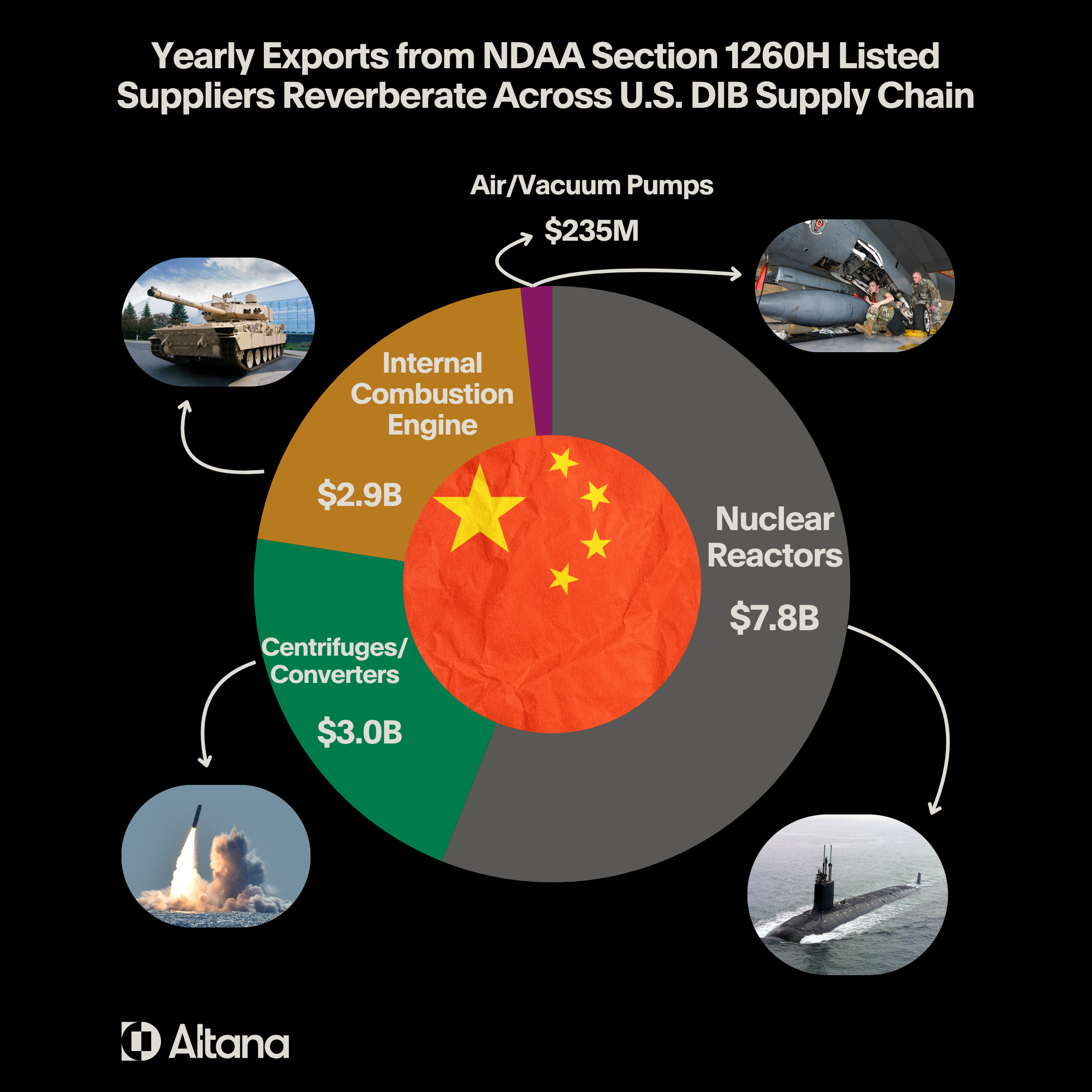
- Upstream exposure to Section 1260H listed Chinese entities touches $7.8 billion in yearly shipment value from nuclear reactors and reactor parts alone, components vital to ballistic submarines and hypersonic weapons platforms.

How to Secure DIB Supply Chains With AI
Get the Full GuideWhy does NDAA Section 1260H matter for the DIB?
- Starting on June 30, 2026, the DoD will be prohibited from entering into direct contracts on listed entities.
- One year later, in 2027, the prohibition extends to indirect procurements, meaning defense contractors must ensure their supply chains are free from goods, services, and technology from these listed Chinese military companies – or they will lose government contracts.
High-value upstream imports from Section 1260H listed suppliers reverberate across U.S. DIB supply chain
Get DIB value chain visibility, traceability, and collaboration with Altana’s product network
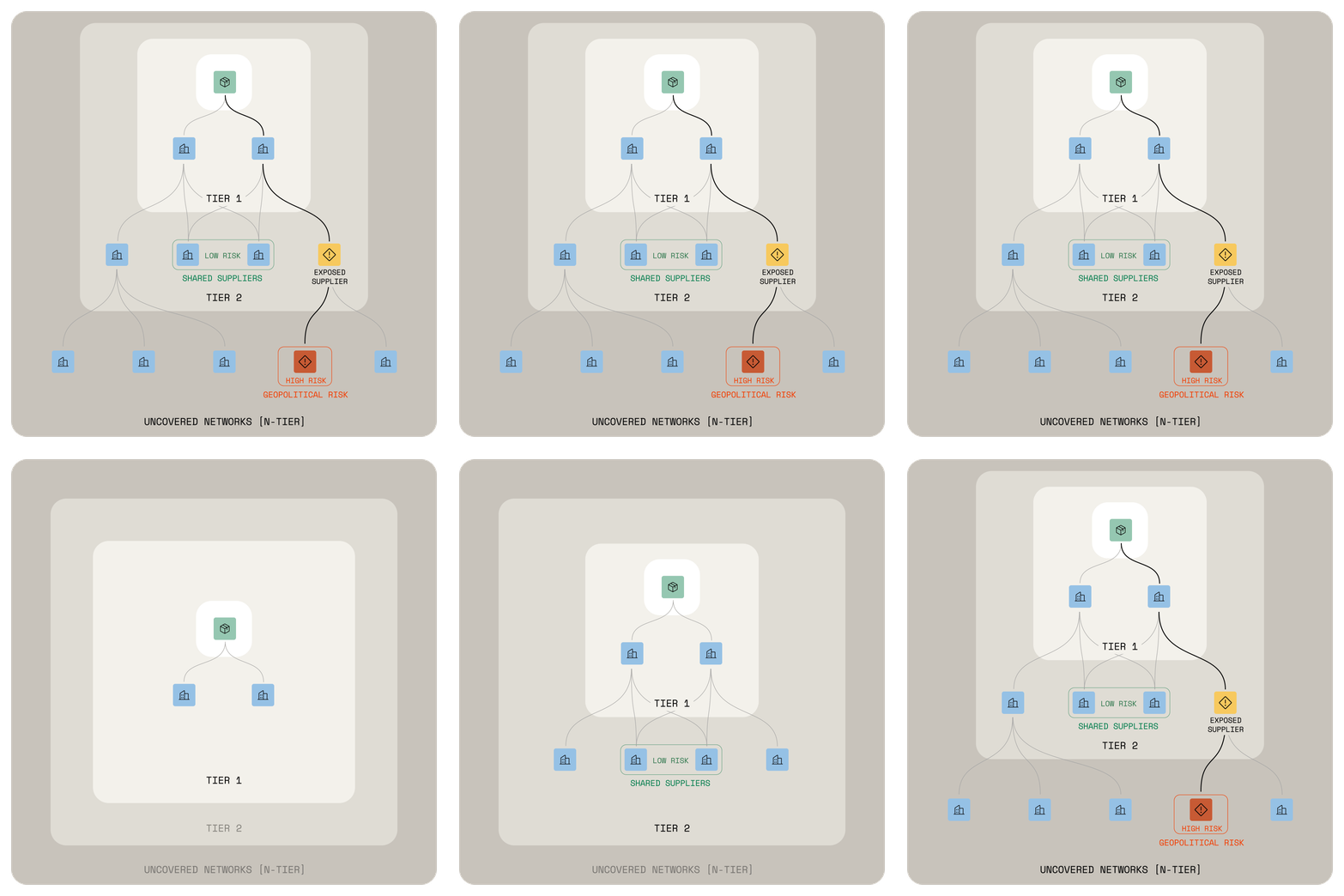
- Visibility means getting an instant, dynamic map of N-tier relationships at a product level. AI reveals specific multi-tier product value chain connections and uncovers hidden relationships and risks, such as upstream exposure to entities flagged on the Section 1260H list.
- Traceability means having detailed data and documentation on a product’s lifecycle, as verified by upstream suppliers, to confirm a lack of NDAA violations.
- Collaboration means closer relationships and more real-time communication with government agencies and regulators. Altana Product Passports can be used to collaborate with upstream and downstream supply chain partners, specifically allowing DIB contractors and sub-contractors to work directly with DoD to validate their suppliers' NDAA compliance
About the Analysis
FAQs
NDAA Section 1260H, first introduced in 2021, requires the Department of Defense to publish a yearly list of Chinese military companies operating directly or indirectly in the U.S. Section 805 of the Fiscal Year 2024 NDAA then prohibits the Department of Defense from contracting with these listed entities. Defense contractors who fail to clear their supply chains of these suppliers risk losing government contracts.
The first ban takes effect on June 30, 2026, when the Department of Defense will be prohibited from entering direct contracts with entities listed under Section 1260H. One year later, in 2027, the prohibition extends to indirect procurements, meaning defense contractors must ensure their entire supply chains are free of goods, services, and technology from listed Chinese military companies.
Altana's analysis found that 39% of U.S. defense prime contractor imports in 2024 had China or Russia exposure at Tier 3 or beyond. Of those, 267,338 import transactions contained upstream exposure to Chinese military entities flagged under NDAA Section 1260H. This exposure is largely driven by China's control of critical minerals and permanent magnets essential to military production.
Most contractors lack visibility into the deep tiers of their supply chains where this exposure hides. According to Gartner, only 17% of Chief Procurement Officers have visibility into their Tier 3 suppliers. Because Section 1260H exposure sits at Tier 3 or beyond, many prime contractors and sub-contractors don't have an honest accounting of their compliance risk.
Altana's product network gives defense contractors and sub-contractors visibility, traceability, and collaboration across product-level value chains. It produces a dynamic map of multi-tier supplier relationships that reveals hidden upstream exposure to Section 1260H listed entities, replacing burdensome manual mapping and supplier surveys. Altana Product Passports also let contractors work directly with the Department of Defense to validate their suppliers' compliance.


