
Key takeaways
The One Big Beautiful Bill Act narrowed the $7,500 EV tax credit by adding strict new rules on where battery parts and critical minerals come from. American automakers now need product-level traceability across every tier to keep their EV lines eligible.
- The One Big Beautiful Bill Act, signed into law on July 4, 2025, narrowed the $7,500 EV tax credit created by the Inflation Reduction Act of 2022.
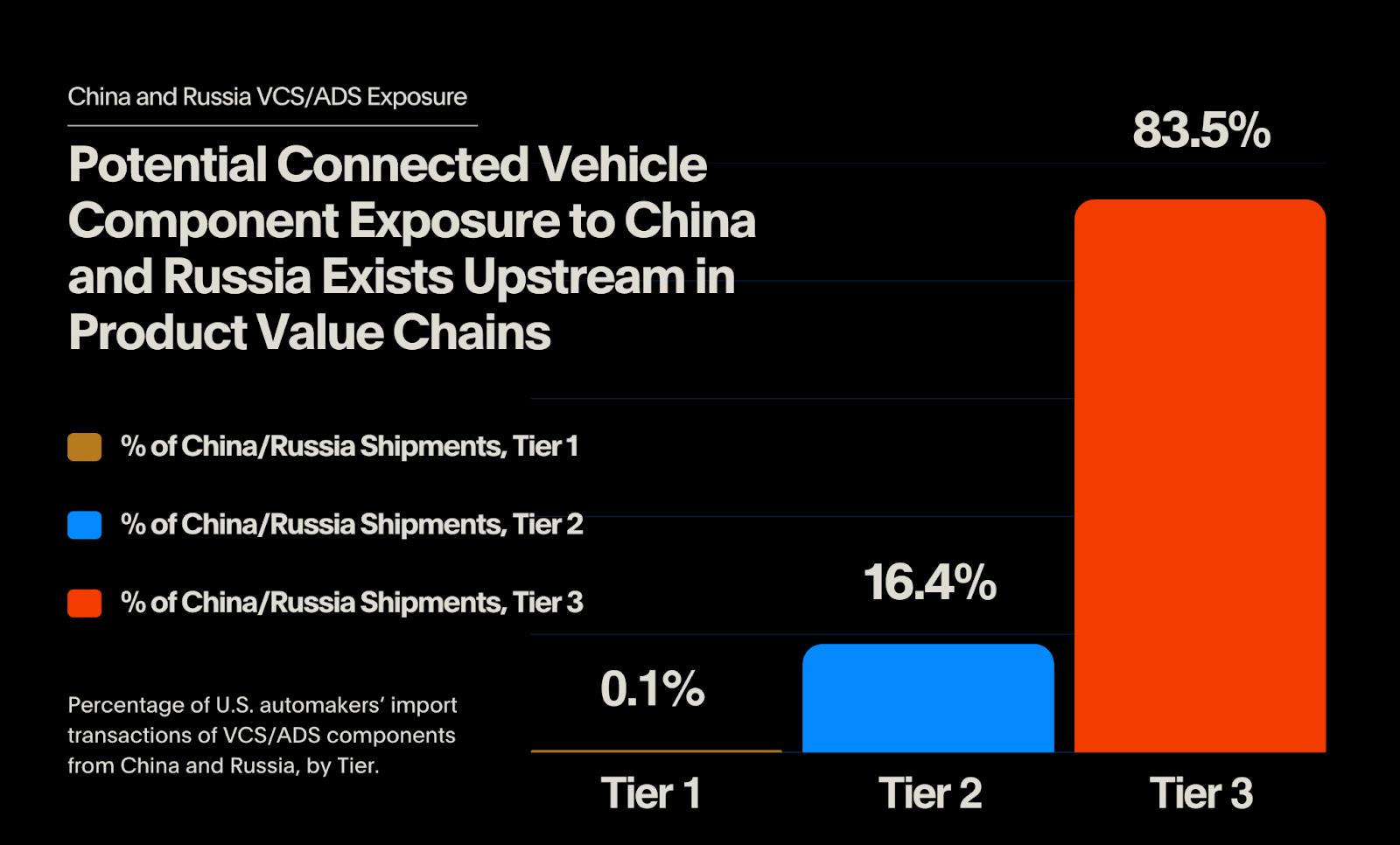
- Altana's analysis found that more than 83% of transactions linked to Chinese and Russian suppliers for connected vehicle components occur at Tier 3 or beyond.
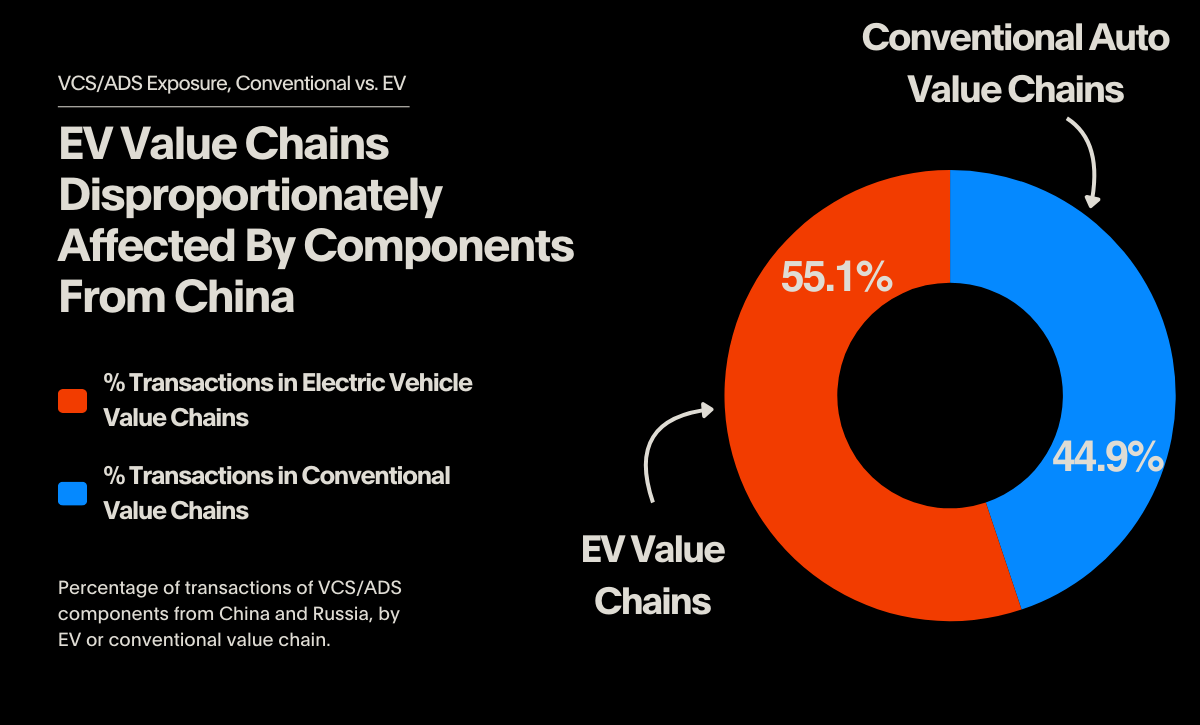
- Although electric vehicles make up only about 10% of new car sales, 55% of U.S. automakers' value chains with exposure to Chinese components are for EVs, according to Altana's analysis.
- The new rules can make a part ineligible for the credit if its manufacturer is just 25% owned by a company linked to the Chinese military, forcing automakers to account for partial and aggregate ownership across every supplier.
Upstream Exposure Threatens Connected Vehicle Compliance
See the Full AnalysisThe new, complex definition of a Foreign Entity of Concern
The Upstream Challenge: Beyond Tier 1, EV value chains susceptible to hostile foreign entities
The AI-powered solution
The road ahead
FAQs
The One Big Beautiful Bill Act, signed into law on July 4, 2025, narrowed the $7,500 EV tax credit by adding strict new rules on the sourcing of battery components and critical minerals. It created two new categories of Foreign Entity of Concern, expanding the list of conditions under which a vehicle becomes ineligible for the credit.
Under the One Big Beautiful Bill Act, a Foreign Entity of Concern now includes two new categories: Specified Foreign Entities and Foreign Influenced Entities. Specified Foreign Entities include companies owned by the Chinese military, companies subject to the Uyghur Forced Labor Prevention Act, and any entity controlled by China, Russia, North Korea, or Iran. Foreign Influenced Entities include companies over which a Specified Foreign Entity holds significant influence, based on factors such as ownership stake and the ability to appoint officers and directors.
Most exposure to foreign components in EV value chains occurs at Tier 2, Tier 3, and further upstream, not at the direct supplier level. Altana's analysis found that more than 83% of transactions linked to Chinese and Russian suppliers for connected vehicle components occur at Tier 3 or beyond. To keep their EVs eligible for the tax credit, automakers must trace their value chains all the way to the mine or soil.
Yes. Under the new rules, a part can be ineligible for the tax credit if its manufacturer is 25% owned by a company linked to the Chinese military. This means an automaker buying batteries must account for partial and aggregate ownership of its suppliers, not just direct government control.
Altana's AI-driven Product Network connects buyers, suppliers, logistics providers, and regulators into a shared network to give automakers visibility across every tier of a value chain. It ingests ownership data, including Ultimate Beneficial Ownership information, crawls a supplier's entire ownership network, and flags entities on sanctions and entity lists. It then performs the complex ownership calculations the new Foreign Entity of Concern rules require, so automakers can quickly determine whether a supplier is compliant.


